A whistle-stop tour of Andalusia– Granada and the Alhambra Palace
Phew! I have been caught up in Christmas and all its arrangements and the aftermath of general lethargy in January. I have decided to ease myself back by concentrating on a whistle-stop tour of Andalusia which I enjoyed in 2013. It was both excellent and exhausting and I don’t think I could repeat it now! But it gives me the opportunity to break a fortnight into easy chunks and an excuse to show a lot of photos.
Sometimes, I see a place on TV or amongst someone else’s holiday photos and I know I have just got to go there. It was looking at a relative’s photos of their visit to the Alhambra Palace in Granada that made me want to see it for myself. However, in addition to Granada, I was going to visit Ubeda, Cordoba, Seville, Jerez, Cadiz, Chiciana de la Frontera and Ronda.
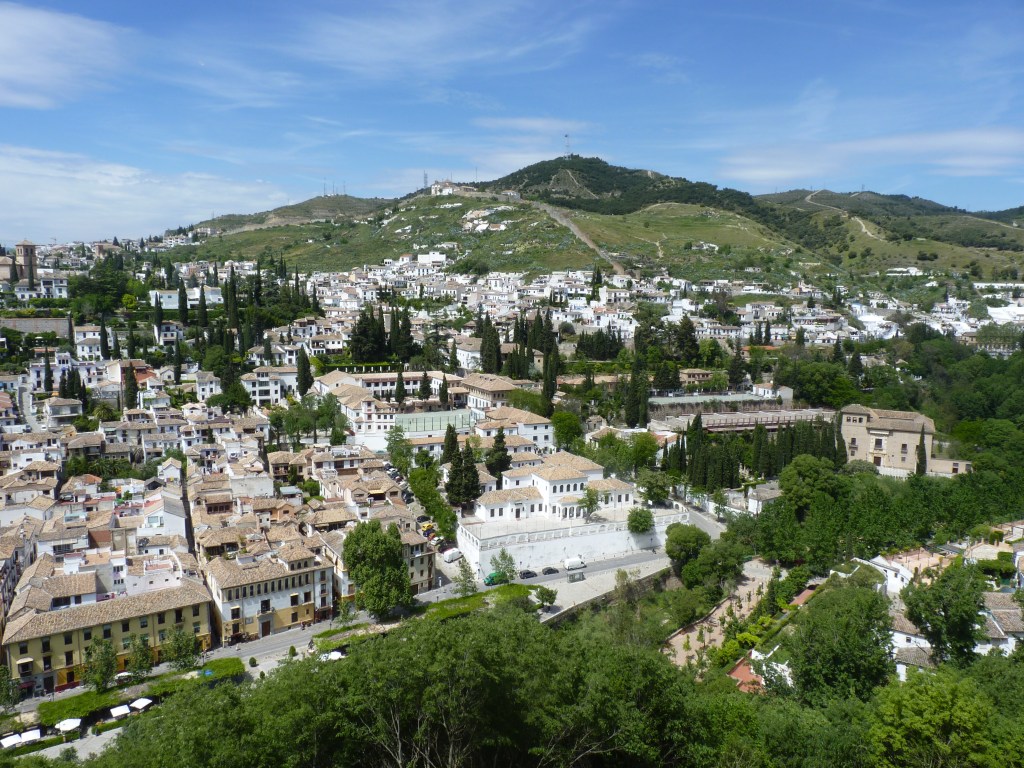
Granada and the Alhambra Palace We arrived via the airport in Malaga, which is not so far from Granada. The tour started as it meant to go on. We hardly had time to settle in at the hotel, when we were whisked off for a walk around the city centre, visiting the cathedral, which was formerly a mosque (a recurring theme). I also made a brief visit to the hotel’s rooftop bar and caught a view of the snow, still on the peaks of the Sierra Nevada in early May.
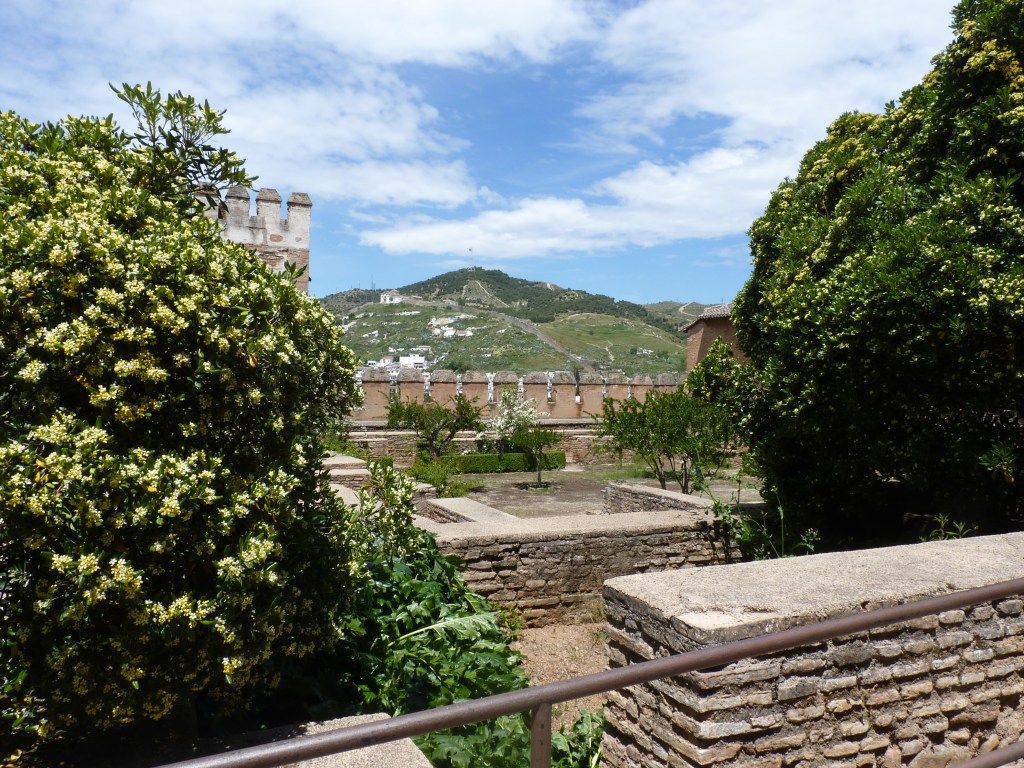
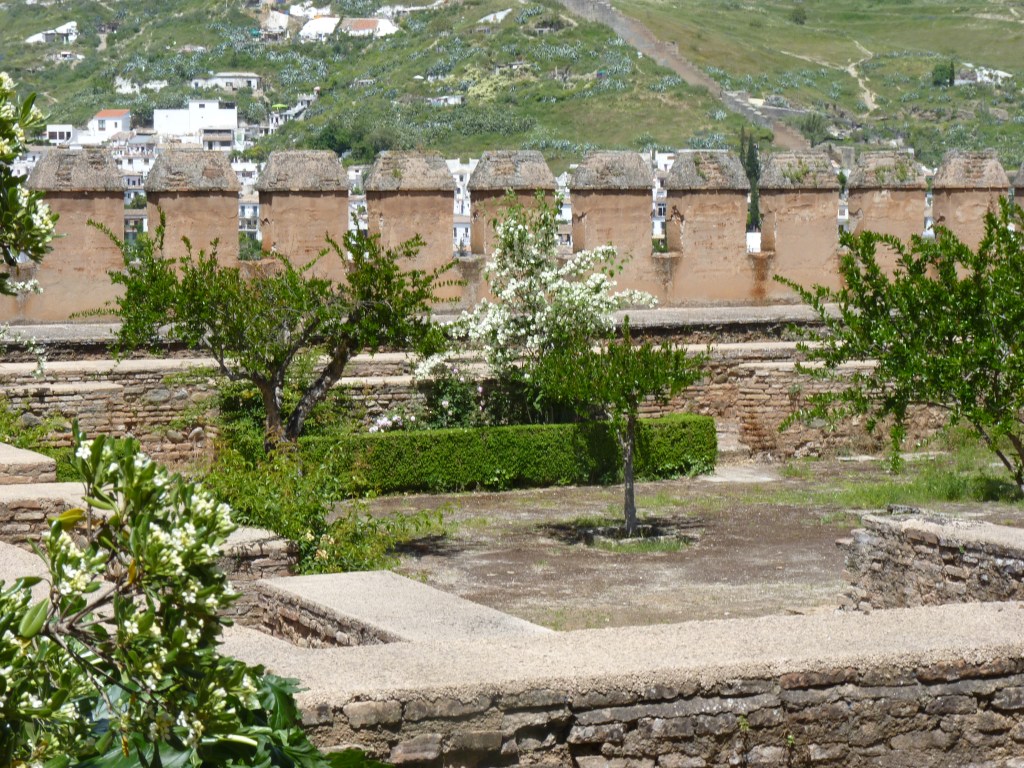
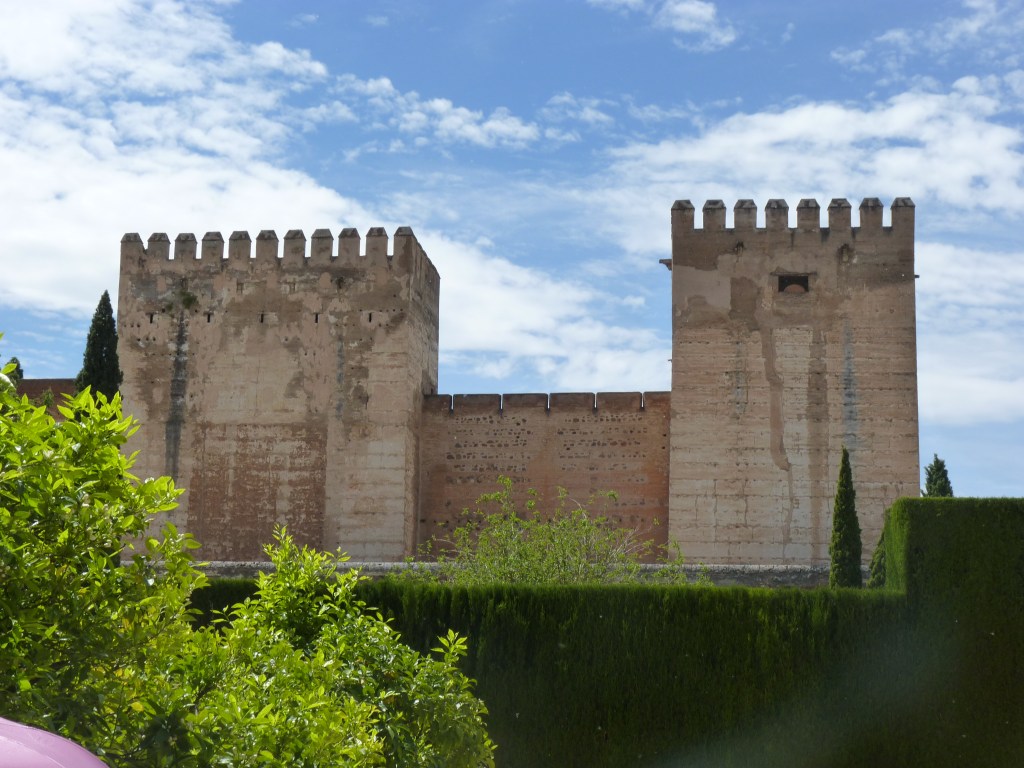
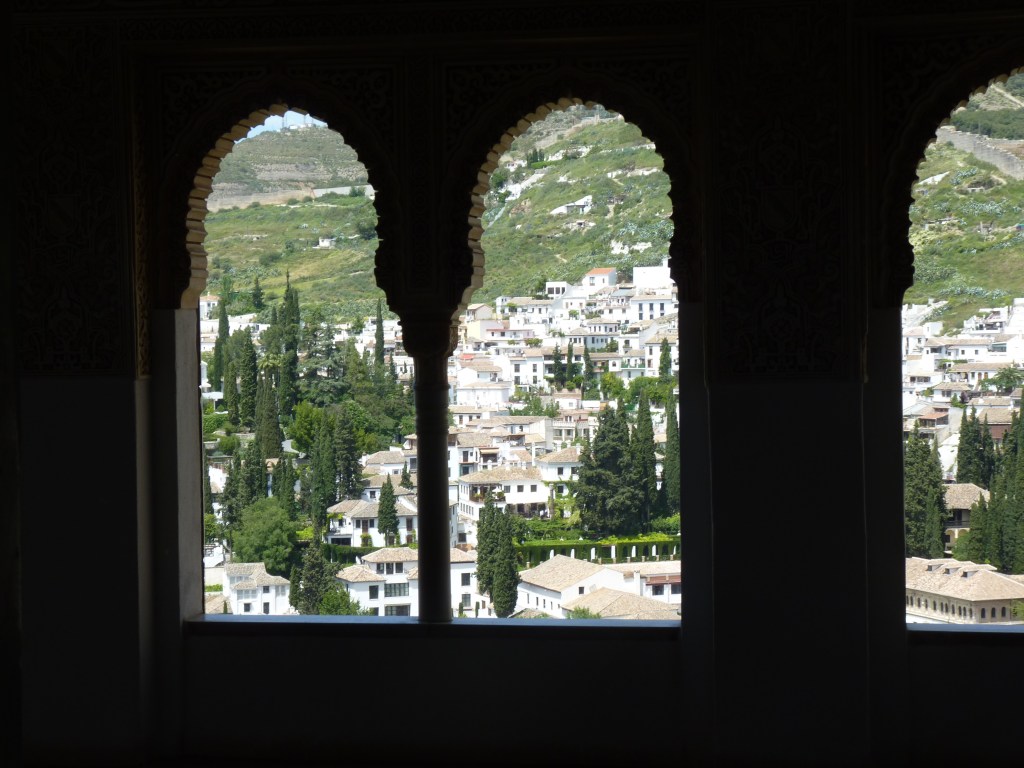
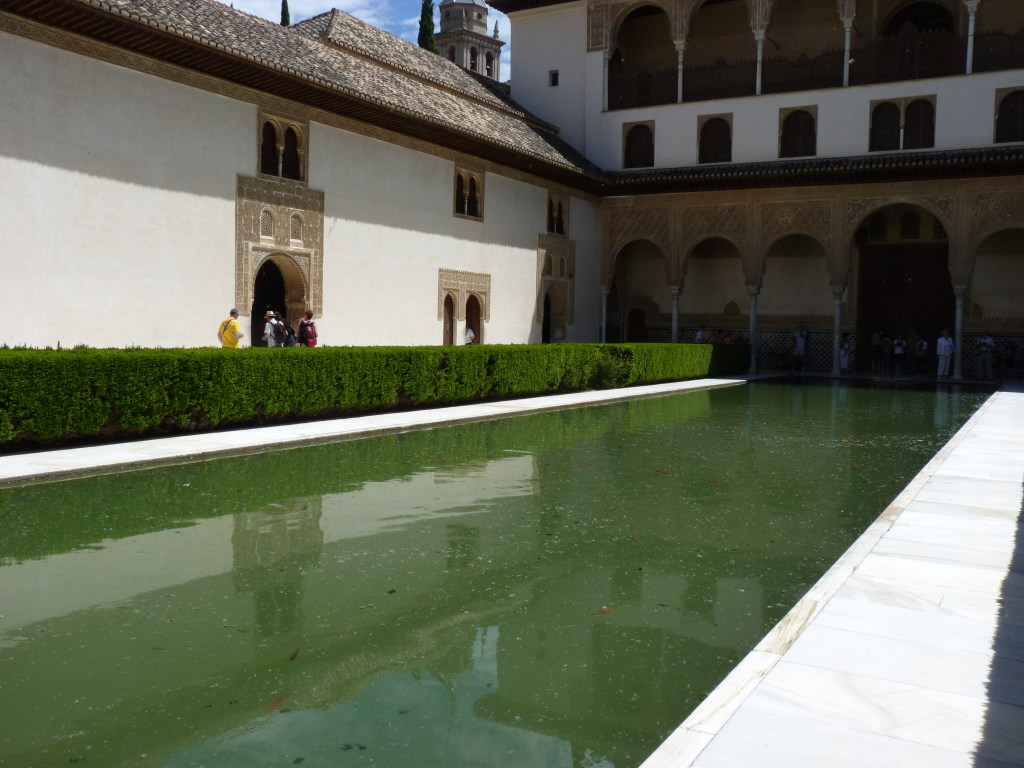
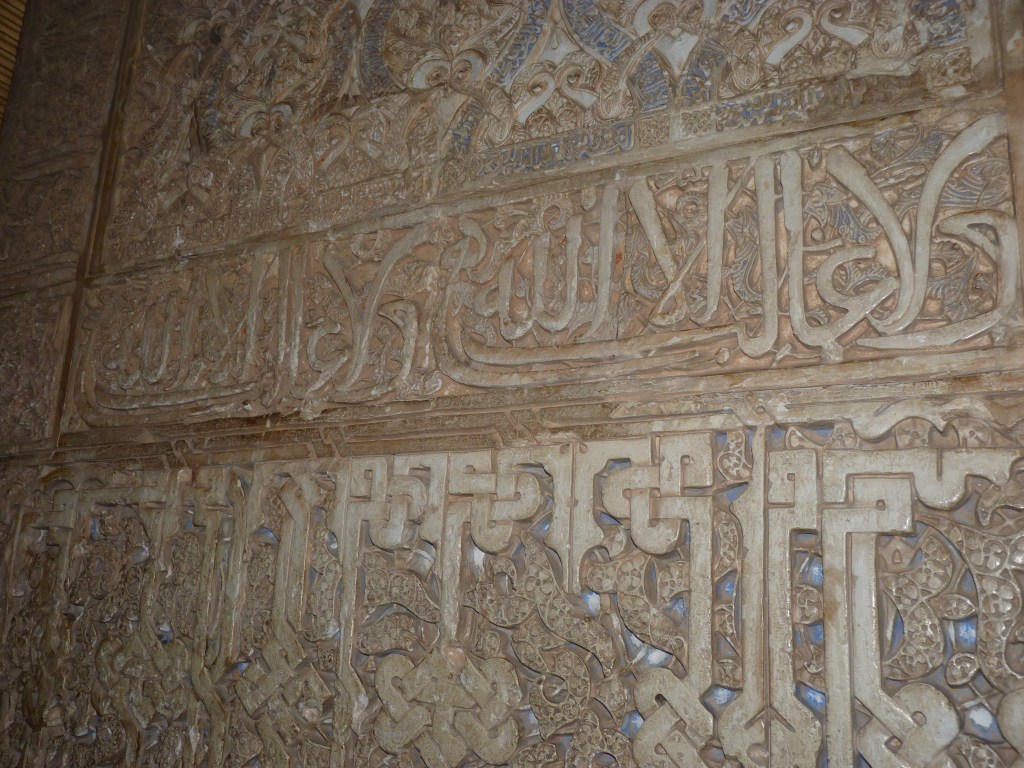
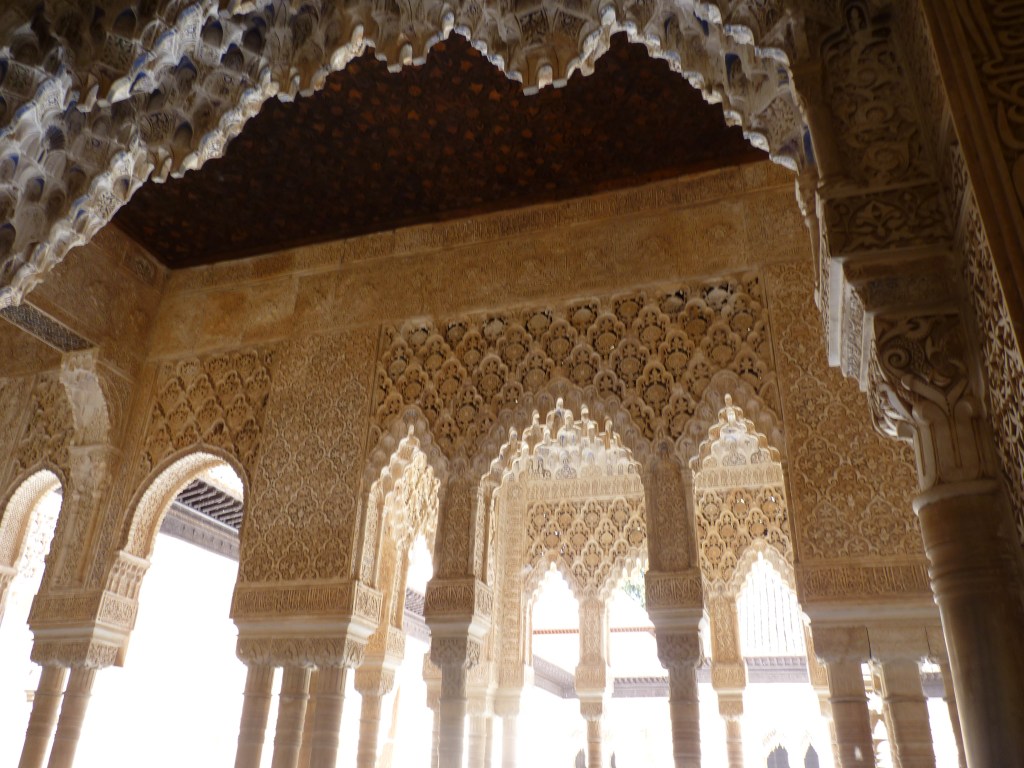
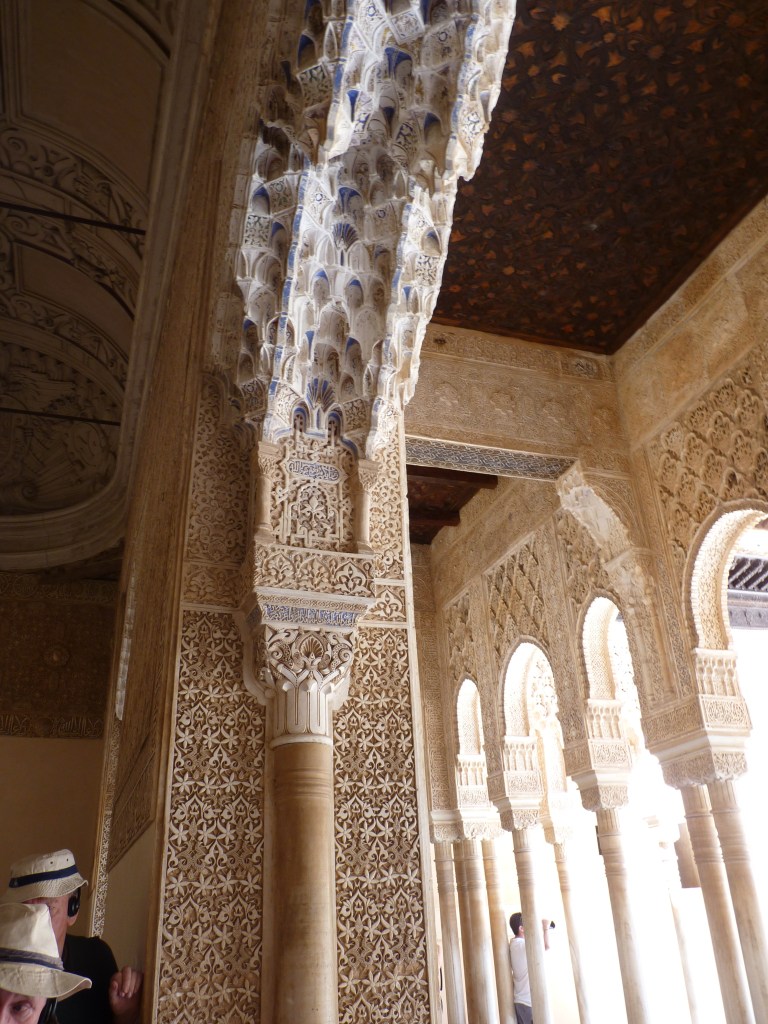
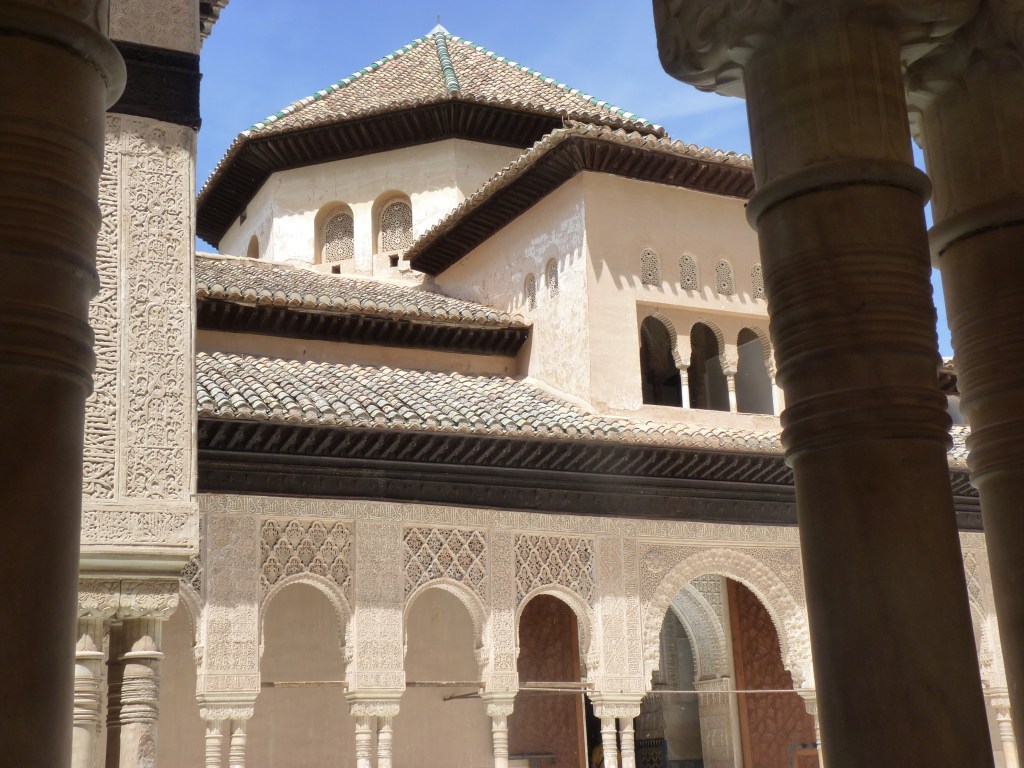
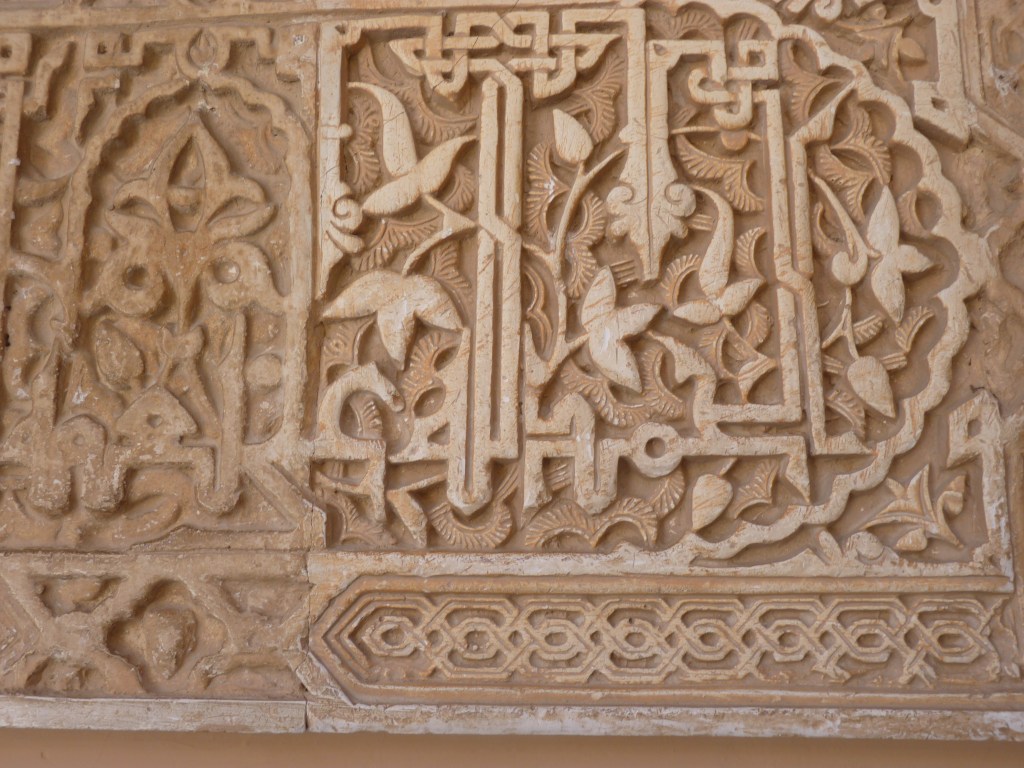
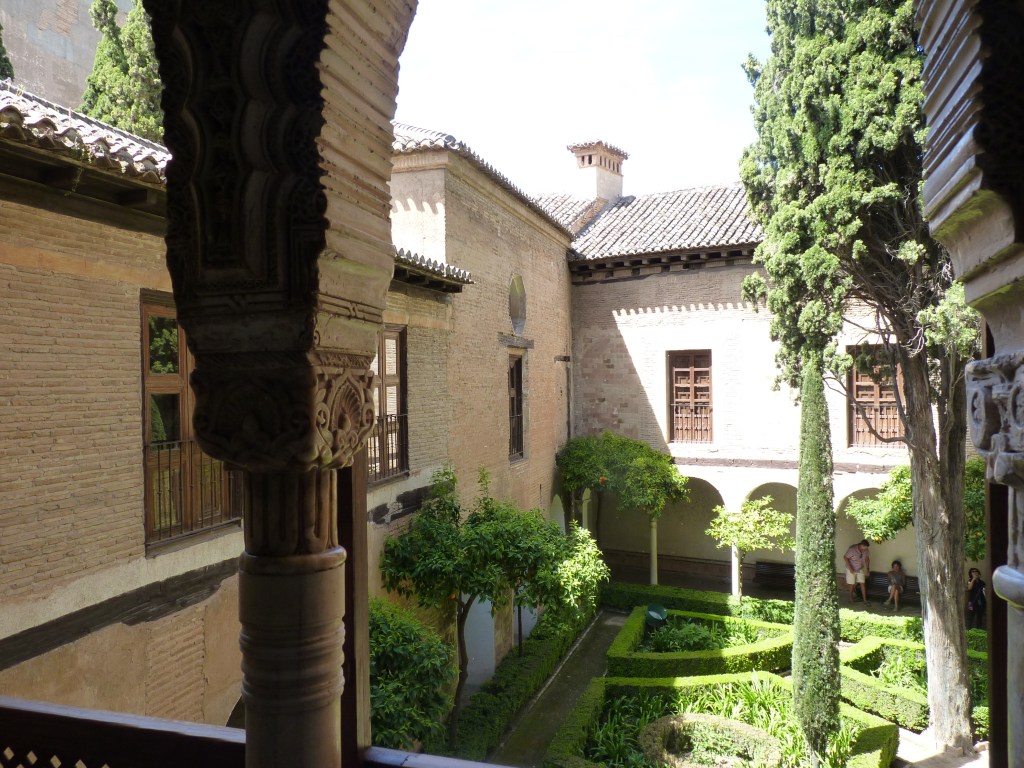
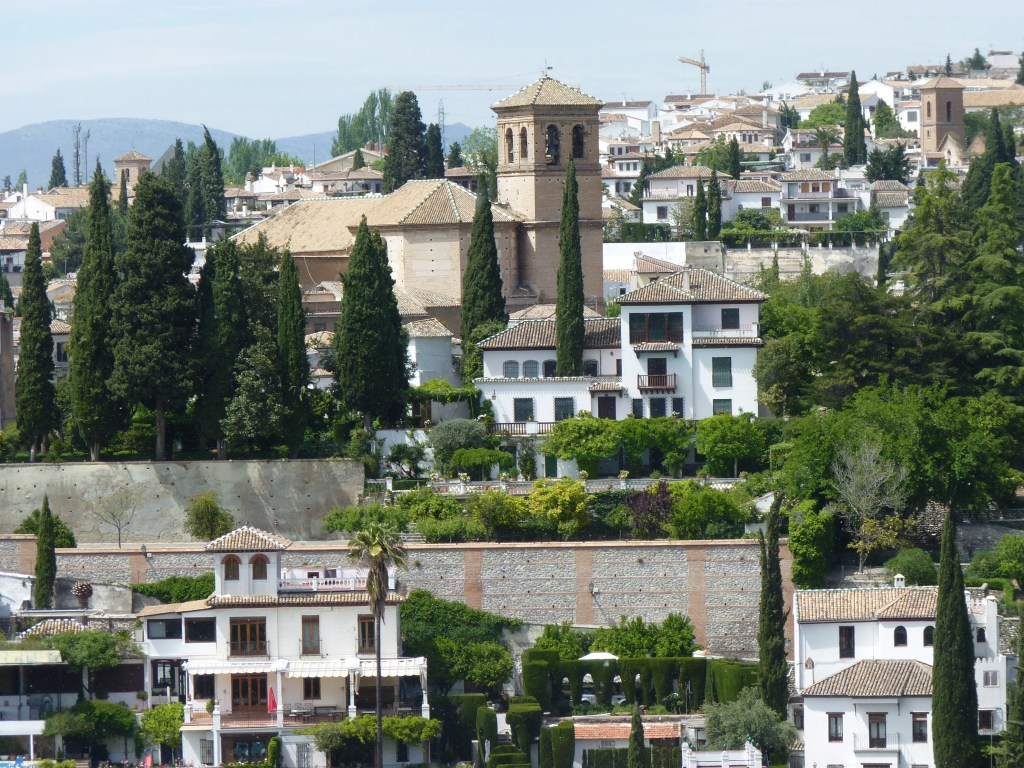
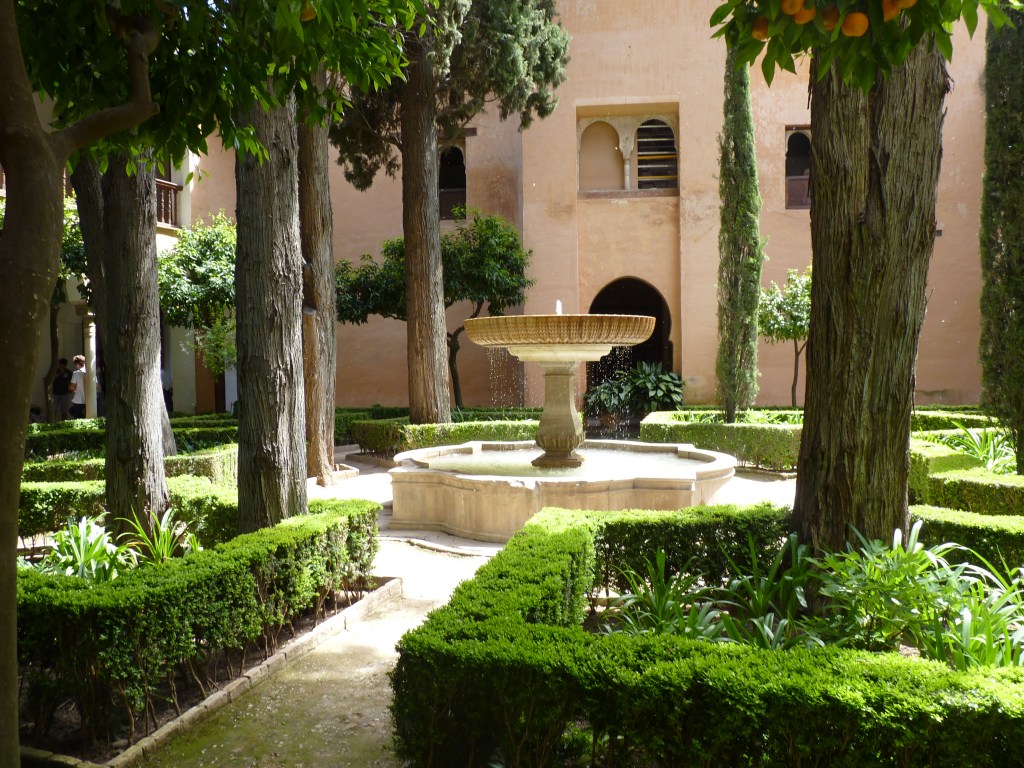
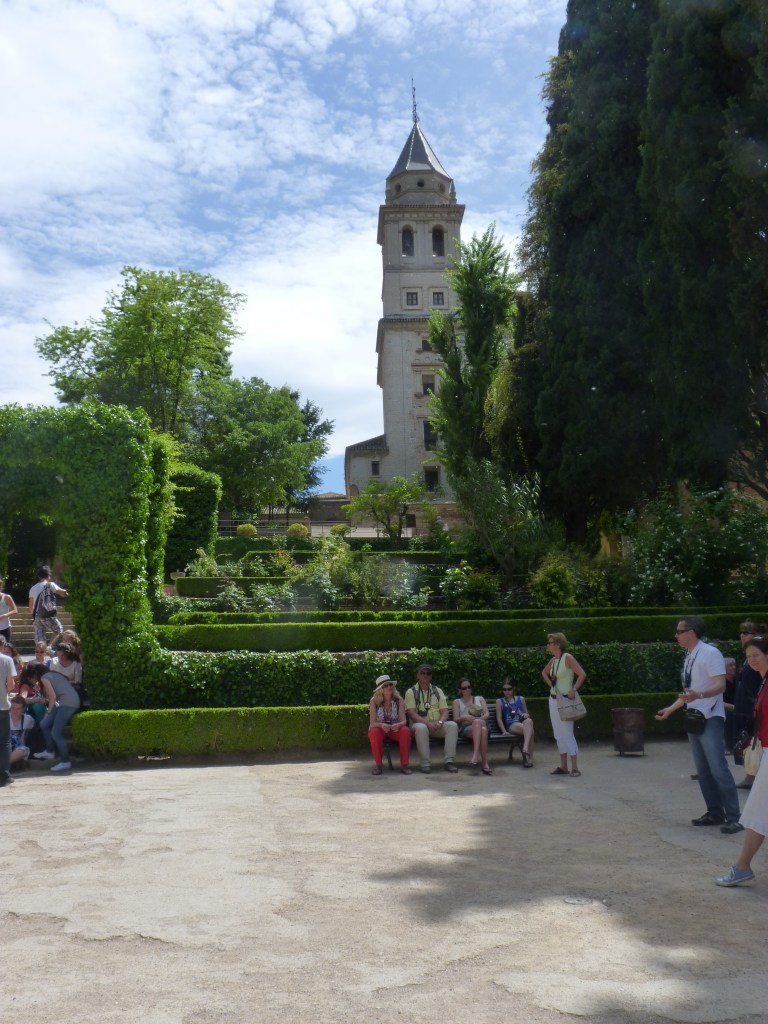
The following day was our visit to the Alhambra. To call it “a palace” is rather selling it short. I’m looking at the huge visitor guide that I was given and remember that it actually comprises several palaces. Between them, they were everything I had hoped for. Set on top of a hill and looking down on Granada, the building was started by Muhammed Al Ahmar in the 13th Century as both a fortification and a palace. The Comares Palace and the Palace of the Lions, filled with more elaborate and beautiful decoration were built during the reigns of his successors. In the late 15th Century, Granada was captured by Catholic monarchs. Isabella and Ferdinand undertook extensive repairs and renovations, although I must say that I saw more beauty in the earlier parts of the building. Charles V commissioned a palace which was to be named after him In 1870, the Alhambra was declared a National Monument and, after more restoration in the 1920s and 30s, it was designated a World Heritage Site in 1984. Here are some photos, I cannot say exactly which part of the palace they are but just soak up the magnificence!
Coach visits were allocated to either morning or afternoon and, unfortunately, our slot was in the afternoon. As we walked round it became hotter and hotter and I missed the visit to see the palace’s gardens, choosing an ice-cream and a sit down instead.
This day wasn’t finished, though, as we spent an exciting evening in a bar (built in a cave), on top of another of Granada’s hills, watching and listening to traditional flamenco dancing and singing. I have written the word “passionate” in my diary!
So I had already achieved what I came to see but there was so much more to experience over the next couple of weeks. We left Granada early the following morning, heading towards Ubeda……
When I am on holiday, I am always interested in learning something about historical places and events but sometimes these things stand out and make me take more notice. In 2011 I had another great holiday, this time touring Sri Lanka. Amongst all the beautiful and interesting things I discovered there, two particularly stick in my mind. There were two places where I felt touched by the history of this small island. The first was an ancient city which dates from the 10th Century and the second was a devastating event in our own lifetime.
After flying from Manchester to Dubai and then onwards to Columbo for an overnight stay, we had a whistlestop tour of the capital before heading north to Habarana and the Cinnamon Lodge Hotel. Here the rooms were situated in small blocks around the beautiful gardens. It was necessary to keep your doors and windows closed to avoid the marauding monkeys who populated the gardens, eyeing you up as you walked to your room and jumping all over the rooftops early in the morning. To me the hotel is especially memorable for its deliciou food, with lots of choice and it is the only hotel I have ever stayed in where there were so many desserts to choose from that they had their own (chilled) room!!
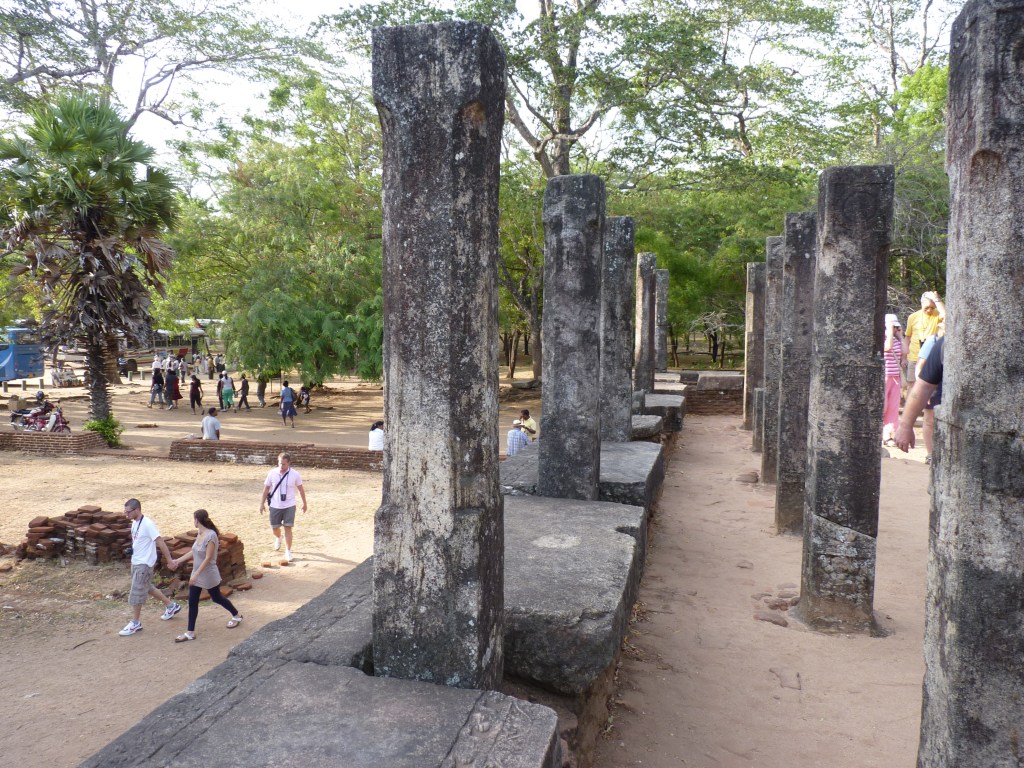
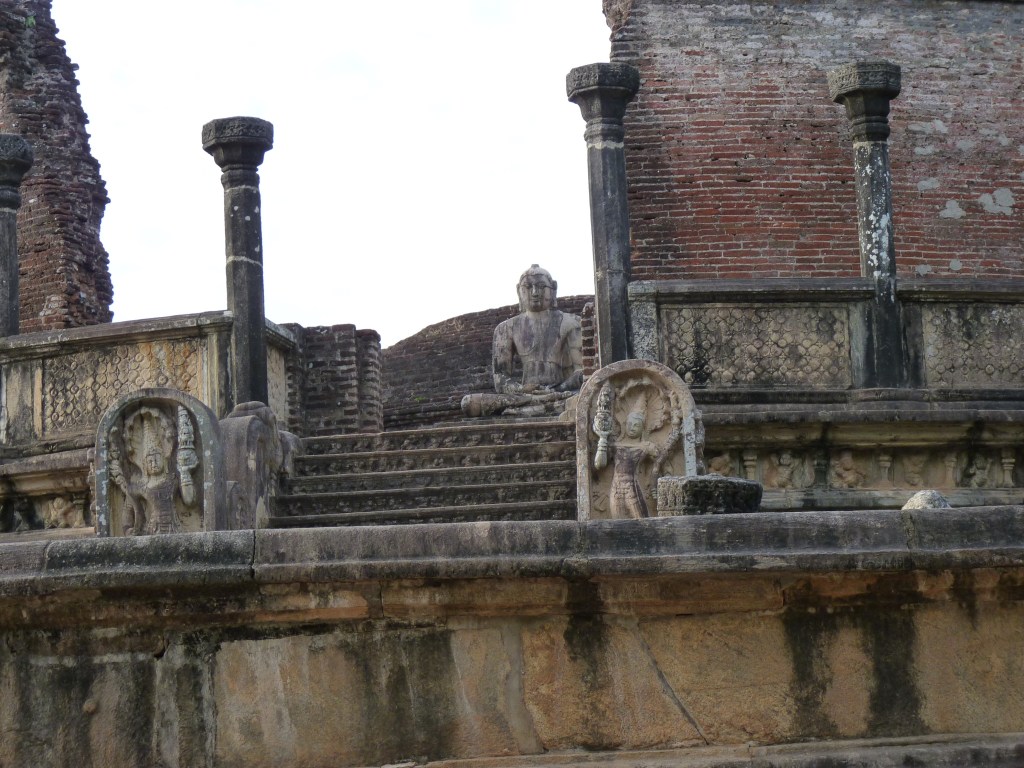
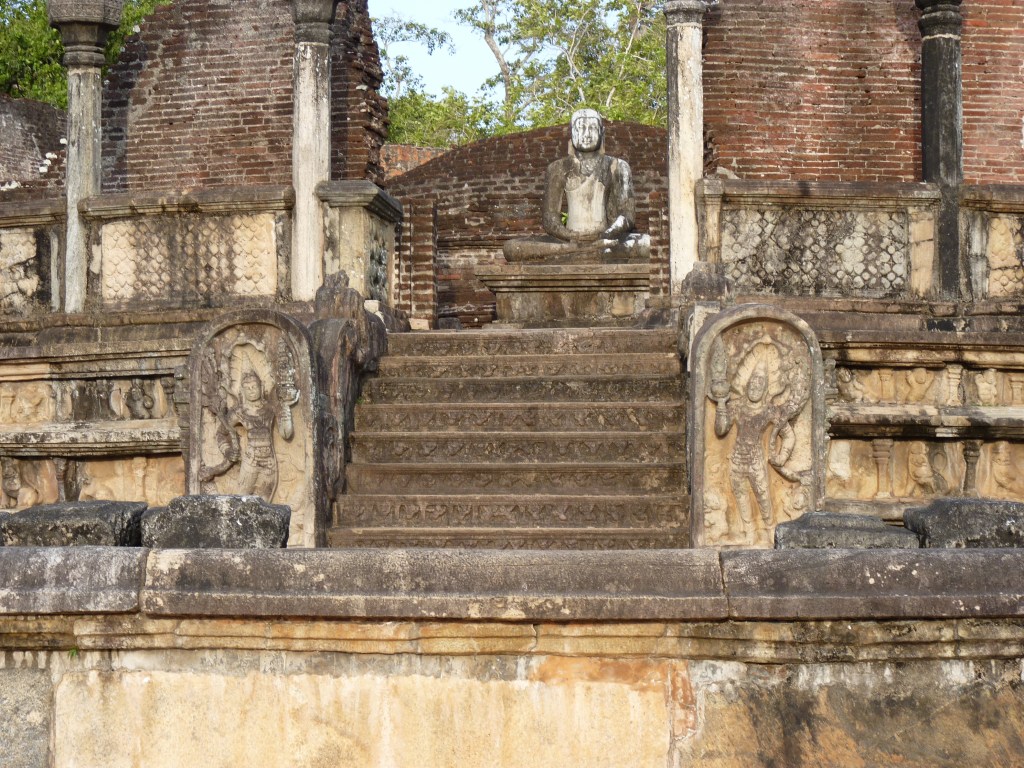
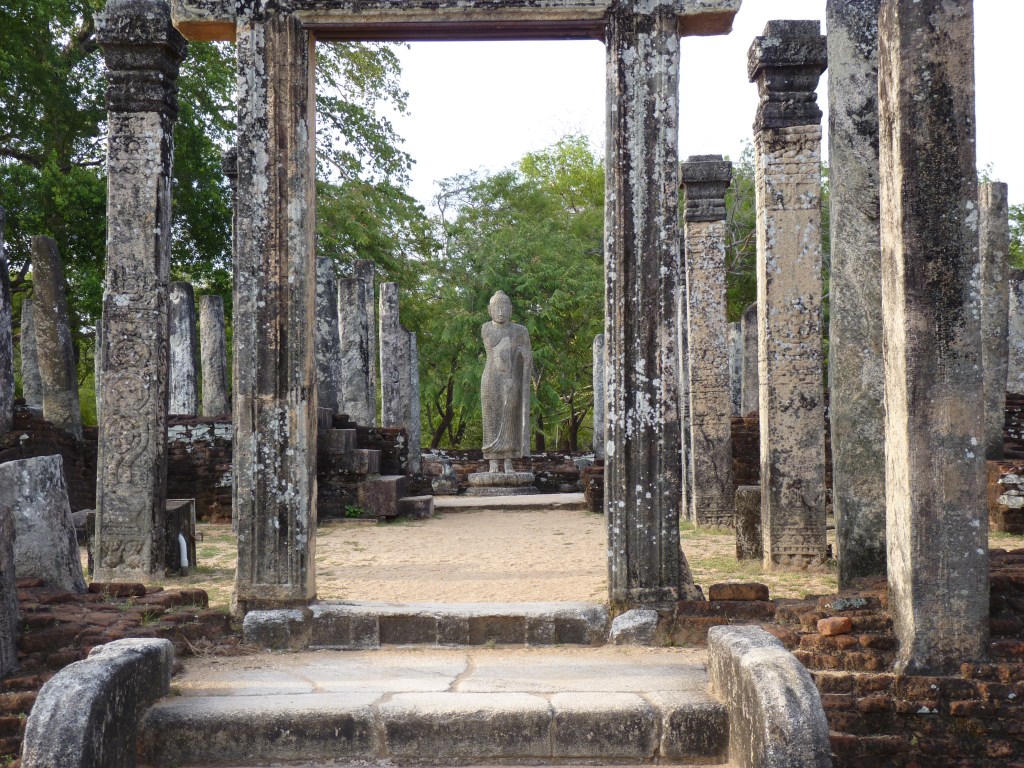
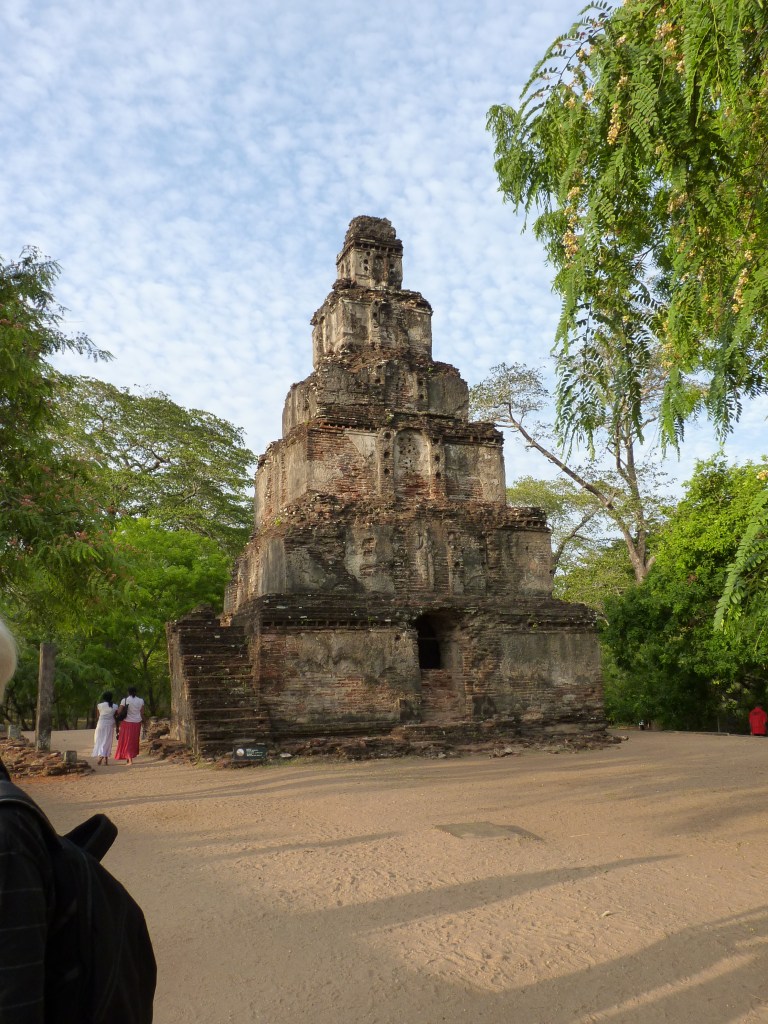
We set off from the Cinnamon Lodge to visit the ancient city of Polonnaruwa, a UNESCO World Heritage Site. Many hundred years ago, Polonnaruwa was the capital of Sri Lanka but today it is renowned for the ruins of a 12th century garden city built by King Parakramabahu.
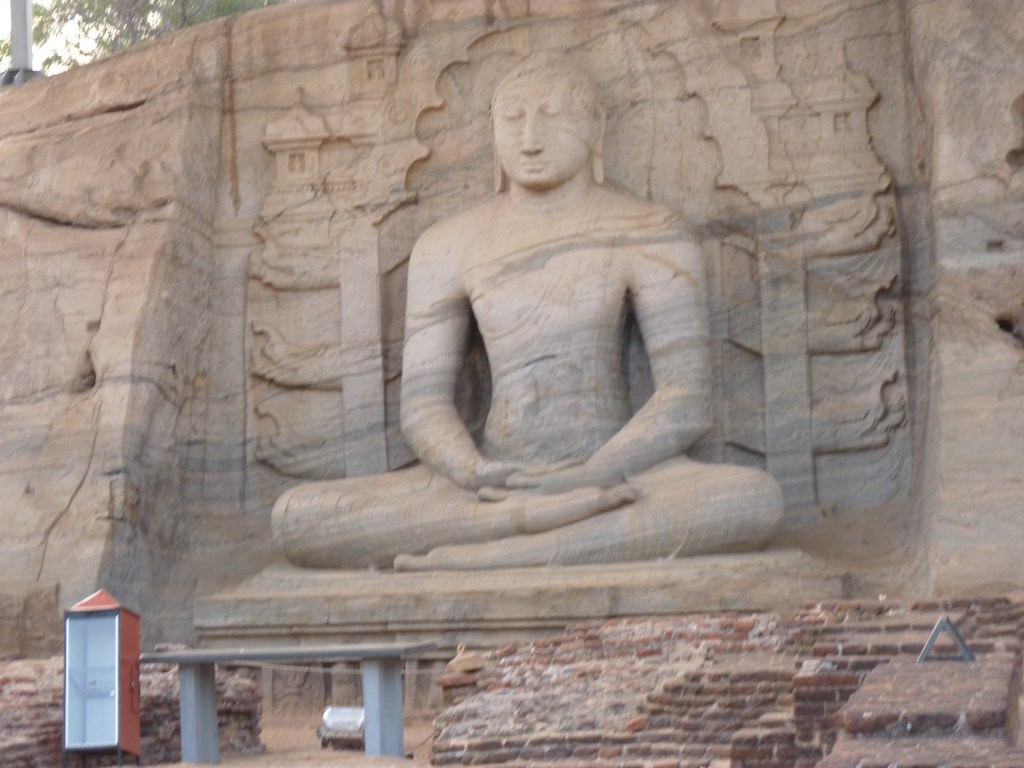
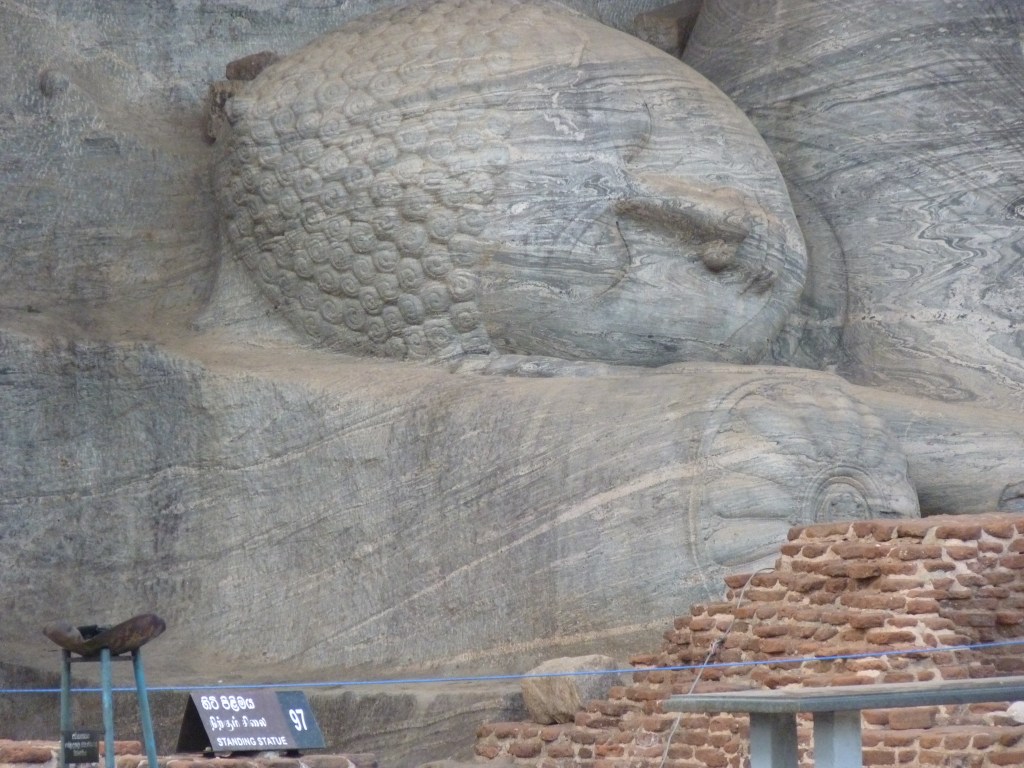
As you can see, many structures are still standing and we spent some time looking around. Close to the buildings but quite separate in Gul Vihara (The Rock Monastery), containing four huge sculptures of Buddha, thought to portray him close to the time of his enlightenment, Polonnaruwa being a centre for the growth of Buddhism around that time. The seated statue is 4.6m tall, the standing statue is almost 7m tall and the reclining statue is over 14m long. There has been a lot of speculation about what was built between and around the statues as the fourth, smaller statue is within a cave. I think they are beautiful and amazing pieces of work.
Polonnaruwa is also home to a troupe of macacques, who live their lives amongst the old buildings. I’m always fascinated by monkeys, although I don’t always like their over-inquisitive attitude, especially when directed at me and I do find macacques quite scary at times. However, this troop were busy just getting on with their lives. Maybe they were holding back and preparing to appear in several nature programmes across multiple platforms. One tiny new-born member of the troop, Gremlin, was even the star of an episode of “Planet Earth Live” in 2012!
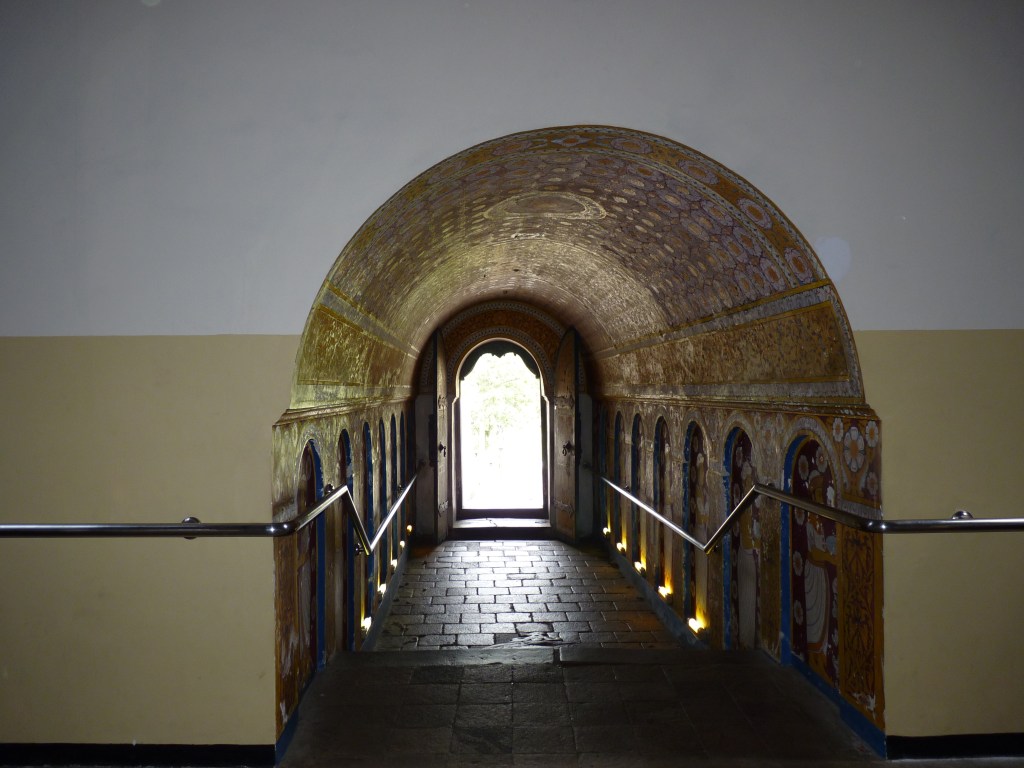
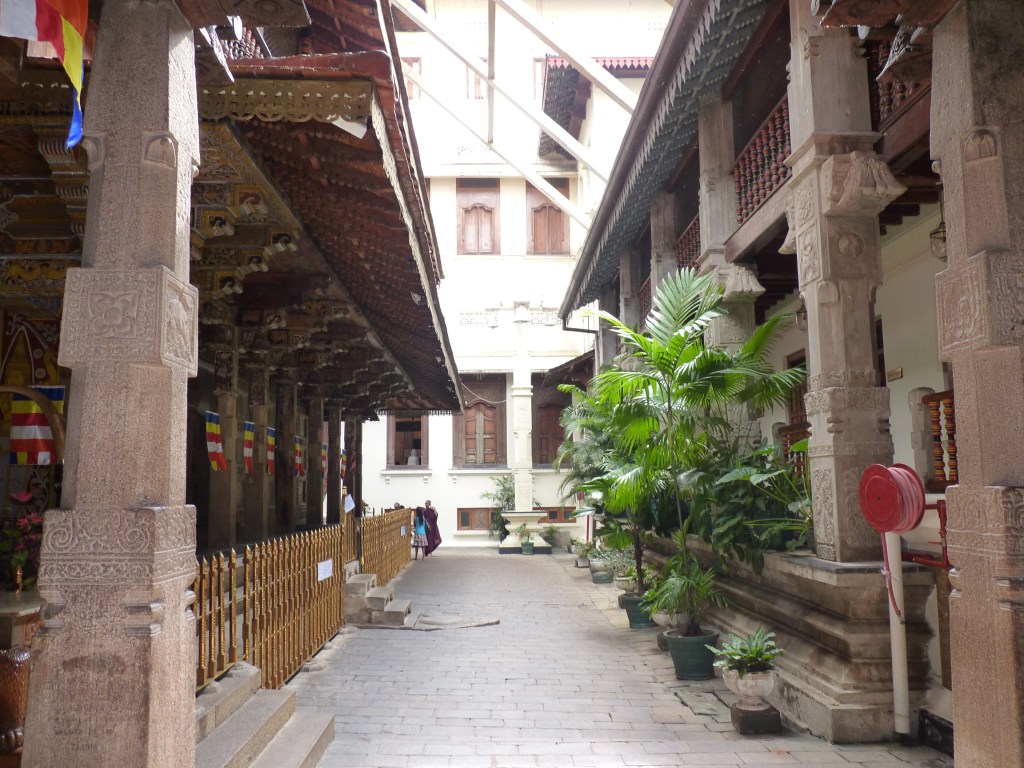
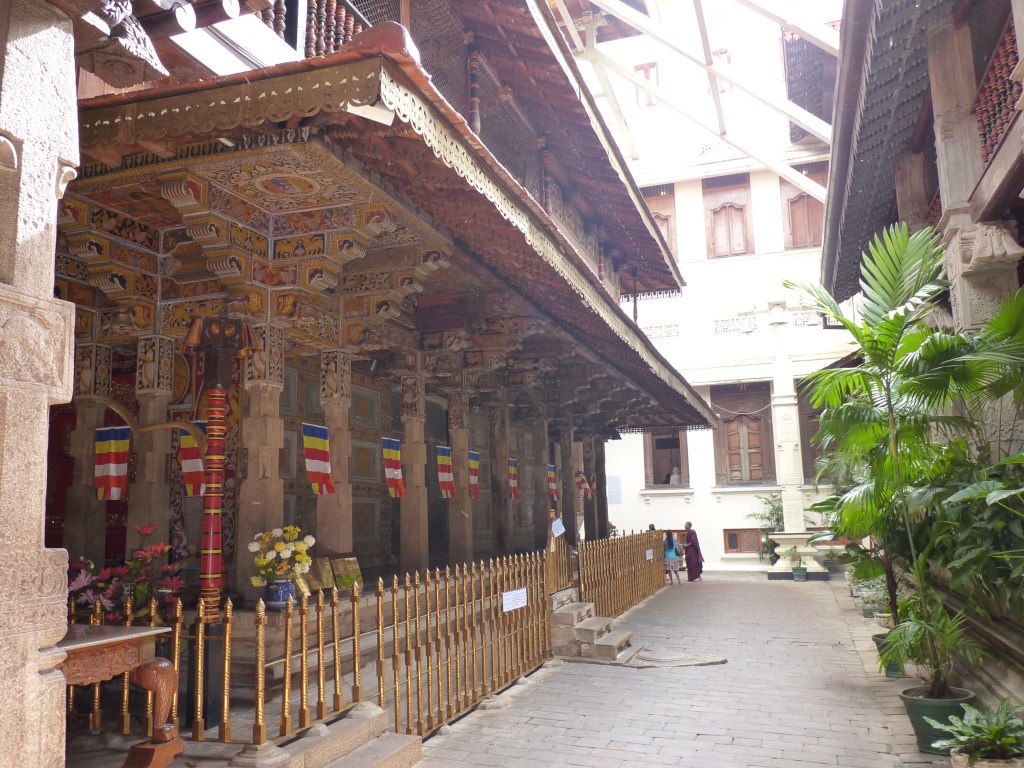
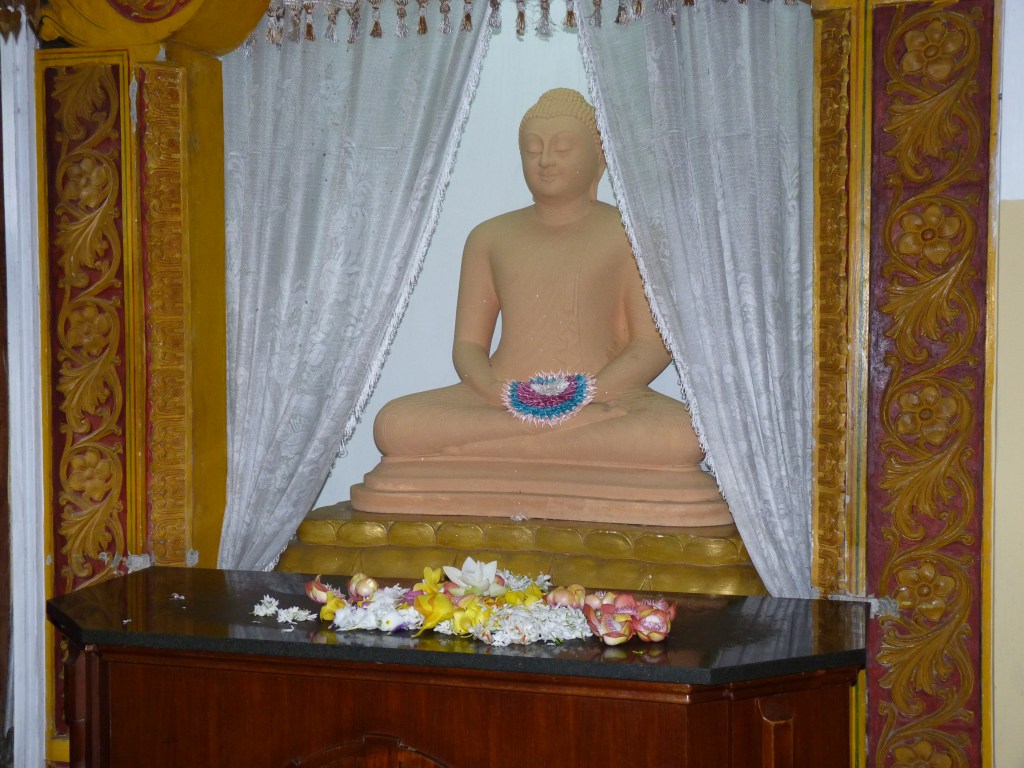
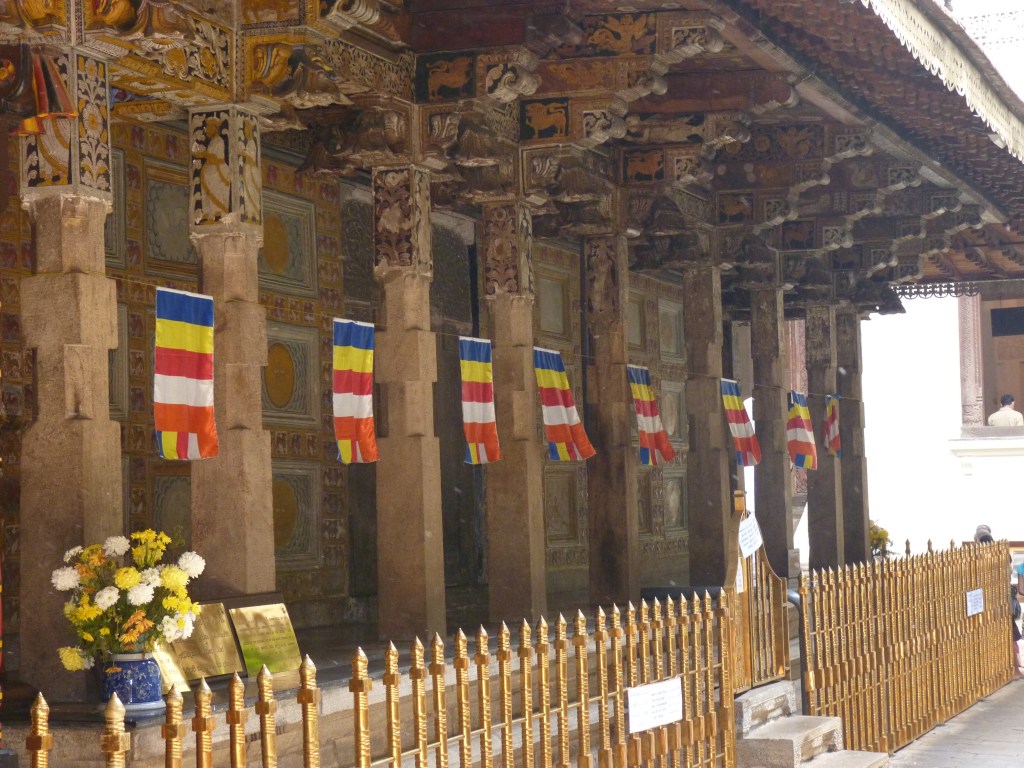
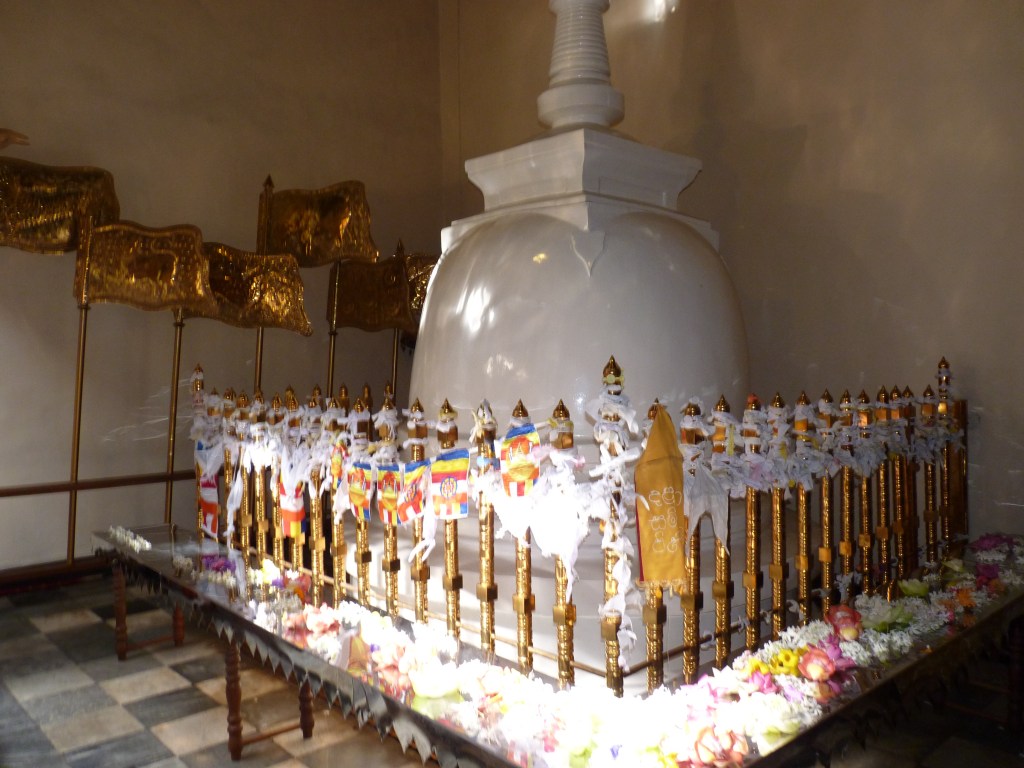
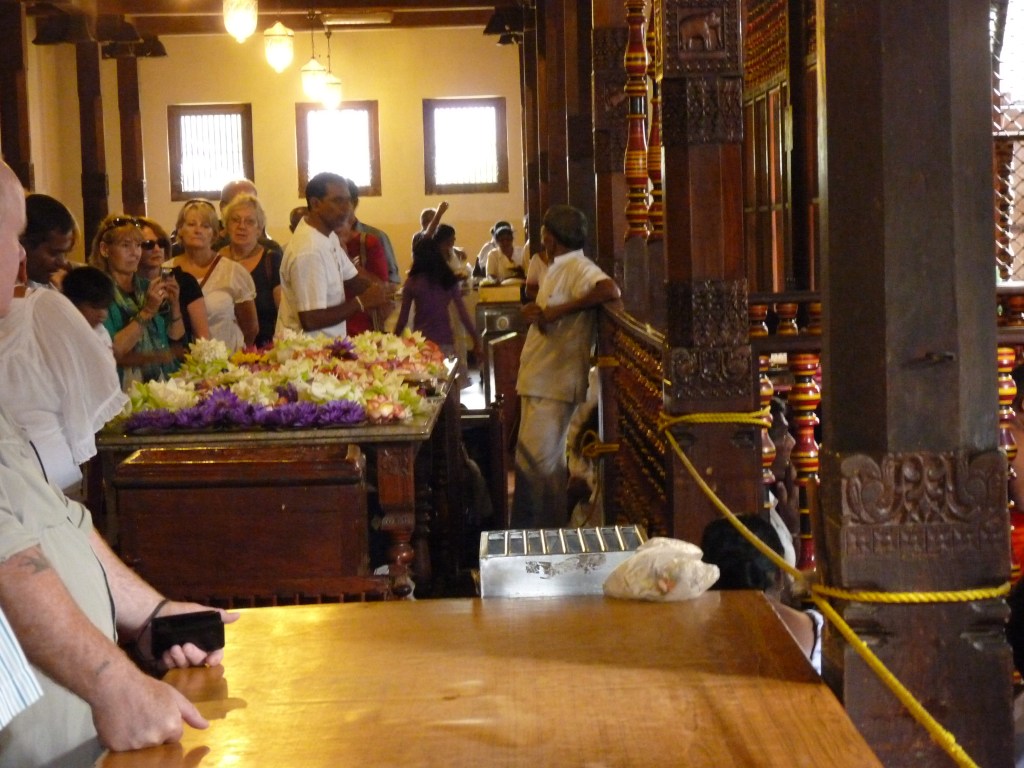
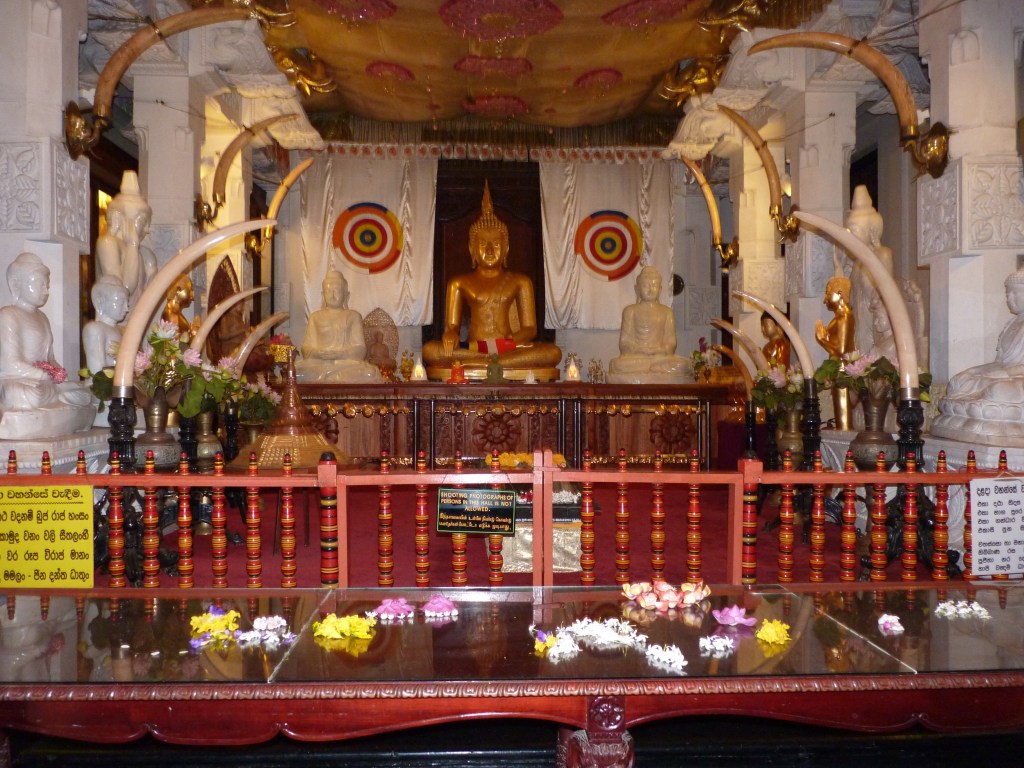
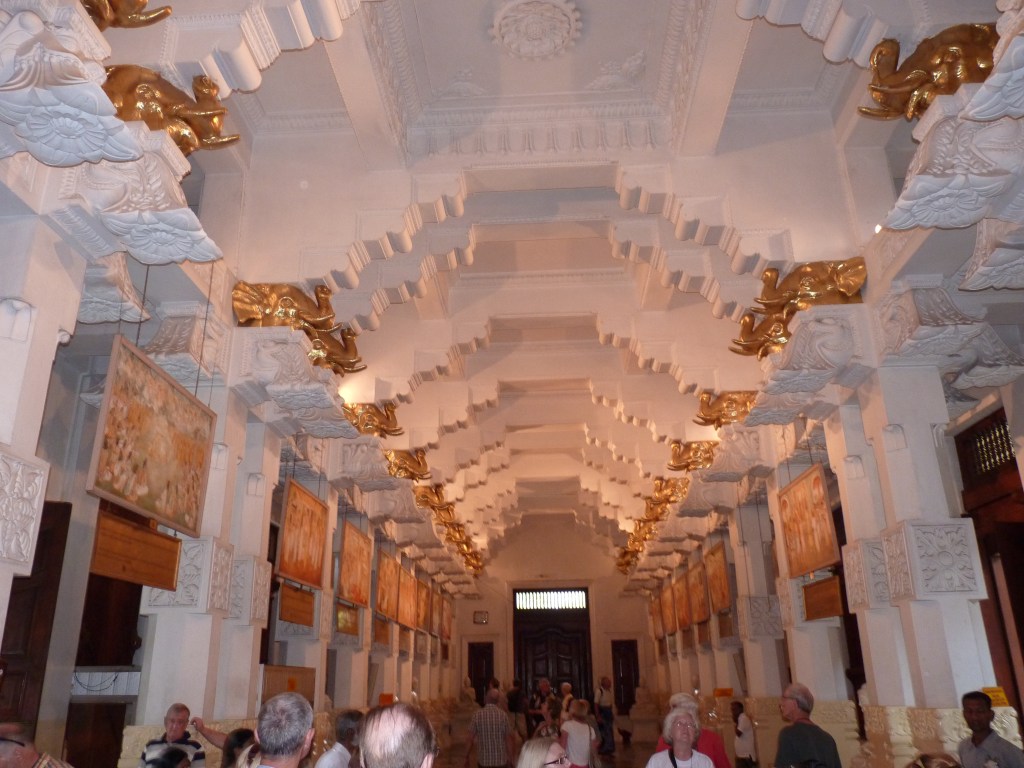
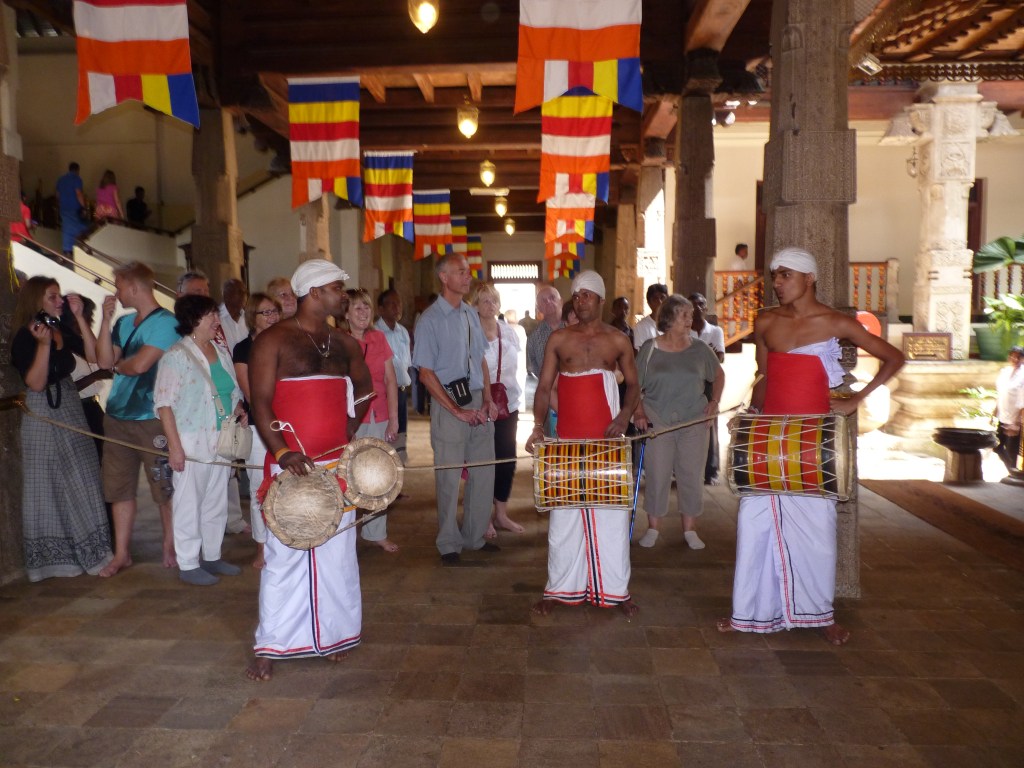
From Habanara, we made our way, via more temples and Buddhas to the town of Kandy. In Kandy we visited the Temple of the Sacred Tooth Relic (the relic being one of Buddha’s teeth). Another World Heritage site, it draws pilgrims from across Sri Lanka and beyond and we joined some of them presenting their petitions. The relic is usually contained within a room which we could n only glimpse from the doorway but we learned that, every four years, the relic is paraded around the town for a whole week .
When we left Kandy, we started to climb up and up along narrow roads with hairpin bends until we were among the tea plantations, full of tea pickers. Then on to Mackwoods for a look around their factory and, of course, a taste of their tea and an opportunity to buy (items that we will have a great problem stuffing into our suitcases at some point!). After a night in Nuwara Eliya we made our way down and down again from the hills, with even more terrifying drops at the side of the road and our heroic driver inching his way past roadworks which seemed to continue for miles. At last we found ourselves at Yala National Park, where we had an evening and an early morning visit.
It was during this visit that we found ourselves at a beach which, we were told, was one of the main beaches struck by the Boxing Day 2004 tsunami. Looking so calm and peaceful it was hard to even begin to imagine the horror of that day but there, in the first photograph below, is a memorial sculpture to remind us.
During the rest of our trip, as we visited Galle and arrived at our final stop at Beruwala, we constantly saw signs of devastation, with many houses left empty; some abandoned by their owners, some where whole families had perished. We visited a nursery and a school where many of the children were orphaned by the tsunami. We heard stories of loss, including one day, while on a river boat trip, the owner told us that his boat had been lifted up from the sea and transported onto the main road of the town. Luckily, he was elsewhere at the time. But we also saw the resilience of people getting on with their lives. The tourism industry seemed to be playing a valuable part.
Strictly speaking I was not here on my own this year, as I was visited by family members and friends throughout my French adventure, but it did begin that way.
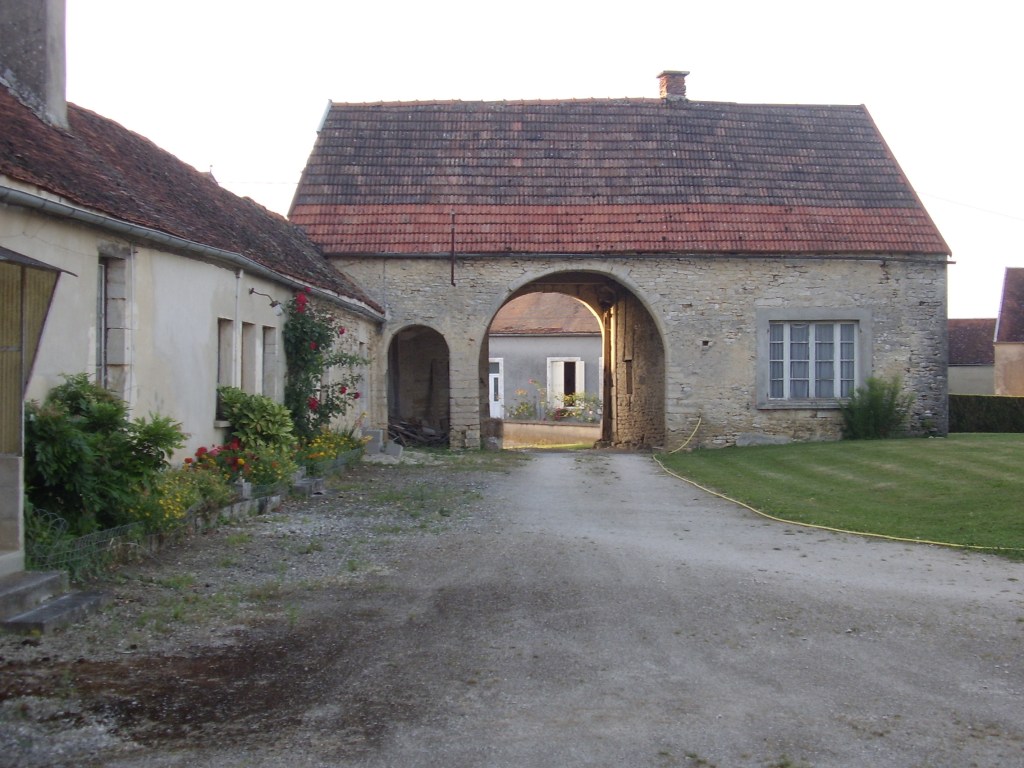
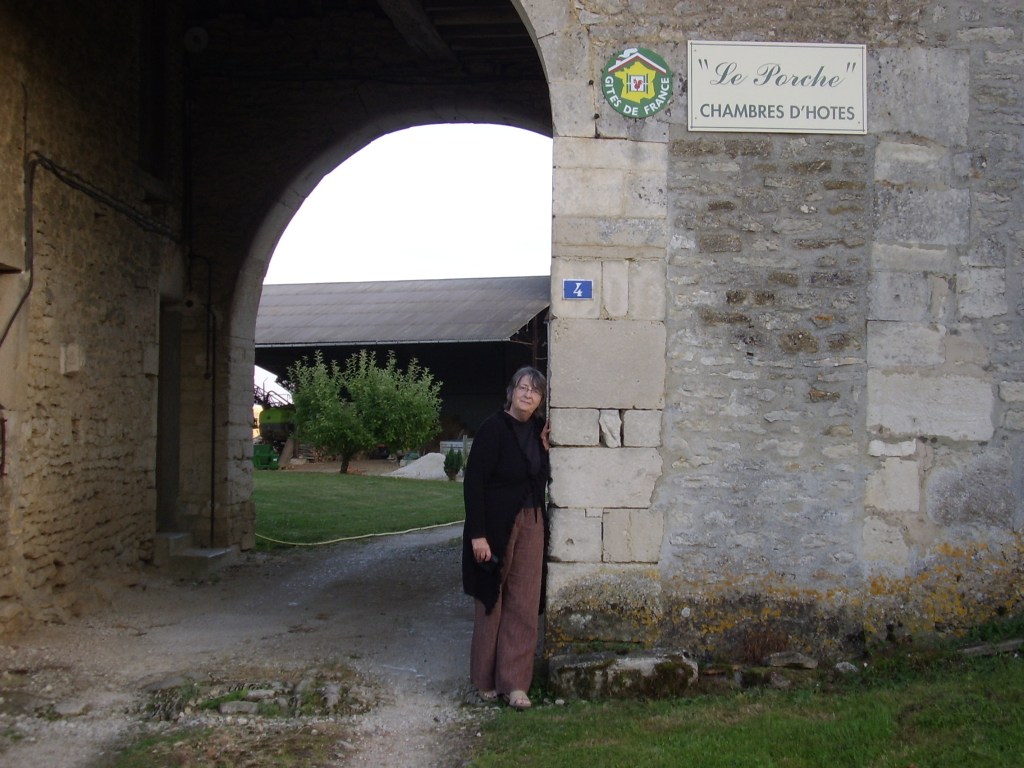
In 2008 I decided, for a change, that I would stay closer to home but take a longer than usual holiday. So I asked my French friends if they could find somewhere, fairly close to their home, for me to rent for a month. They would have been happy for me to stay with them – they told me as much – but I didn’t want to impose and I did want to be able to invite family members to join me. As it was, they found me a wonderful old farm house in the same village and my invitations to stay soon found me with almost a full month of guests.
I set off from home, with my car full to the seams and with my trusty satnav. This was the “here on my own” bit. I drove down from Yorkshire, took the 5pm ferry, arrived safely in Calais and managed to find my way to my overnight hotel. Luckily the journey to my friends’ home can now be done mainly on the motorway, although there are a few tricky junctions where motorways intersect and this was where my satnav came into its own. It is also a bit awkward when you come to the douane on the motorway and have to get out and walk around your car to pay, while the furious drivers are queuing up behind you. Anyway, I found my way the 260 or so miles to their home, including a stop for lunch. I spent a few days staying with my friends before moving into my new “home” on my first Saturday.
“My” farmhouse
My younger daughter and her partner arrived later the same day and stayed for a week. It was the following weekend that we witnessed “The great duckling rescue” in a small town called Les Riceys and this is what happened.
The Champagne region in France is far more widespread than the well-known towns of Reims and Epernay. It extends southwards into the department of Aube, which is where my friends live and which is where the small town of Les Riceys is situated. However, the producers in the north can be very sniffy about the quality of the champagne produced in the south. We once stayed a few days in Reims on our way to visit our friends and any discussion about the champagne produced in these southerly parts of the region was shut down with absolute disdain.
However, every year there is a celebration of the smaller producers of this wonderful wine called “La Route du Champagne” and every few years it will be the turn of Les Riceys (actually 3 communes: Ricey-Haut, Ricey-Haute-Rive and Ricey-Bas) to host the event. In addition to its Champagne, Les Riceys is known for Rosé de Riceys (pink and sparkling) and two still wines, Cộteaux Champenoise Rouge and Cộteaux Champenoise Blanc. I can vouch for the quality of these wines, because I have tried them all!
When you visit “La Route du Champagne”, the premise is that you buy a book of vouchers and a glass, which allows you, over the weekend, to visit producers and sample their champagne. In 2008, this involved 30 producers and cost €8. This year I have read that it cost €30 – still great value, I would argue! As luck would have it, we just happened to be in the right place at the right time.
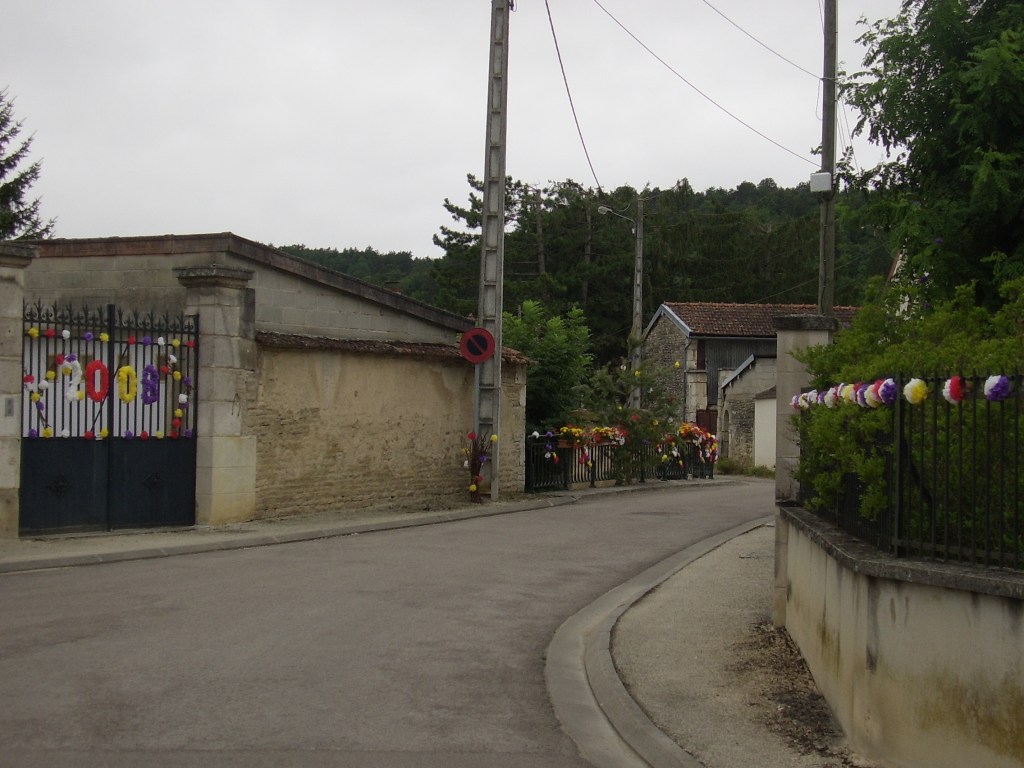
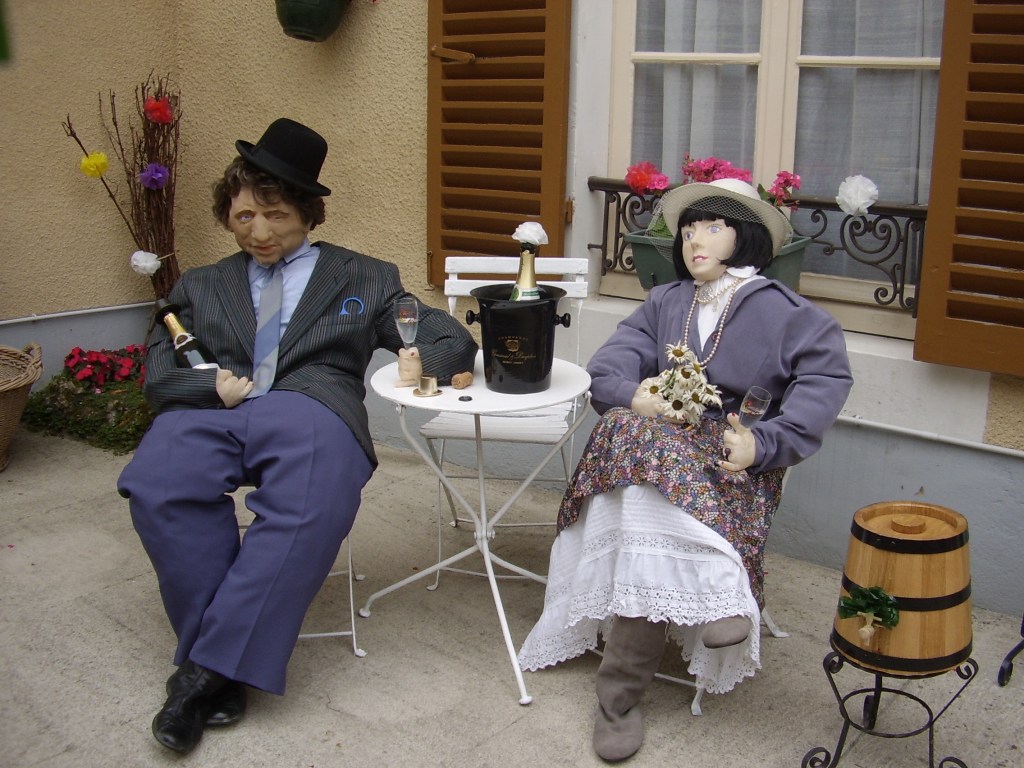
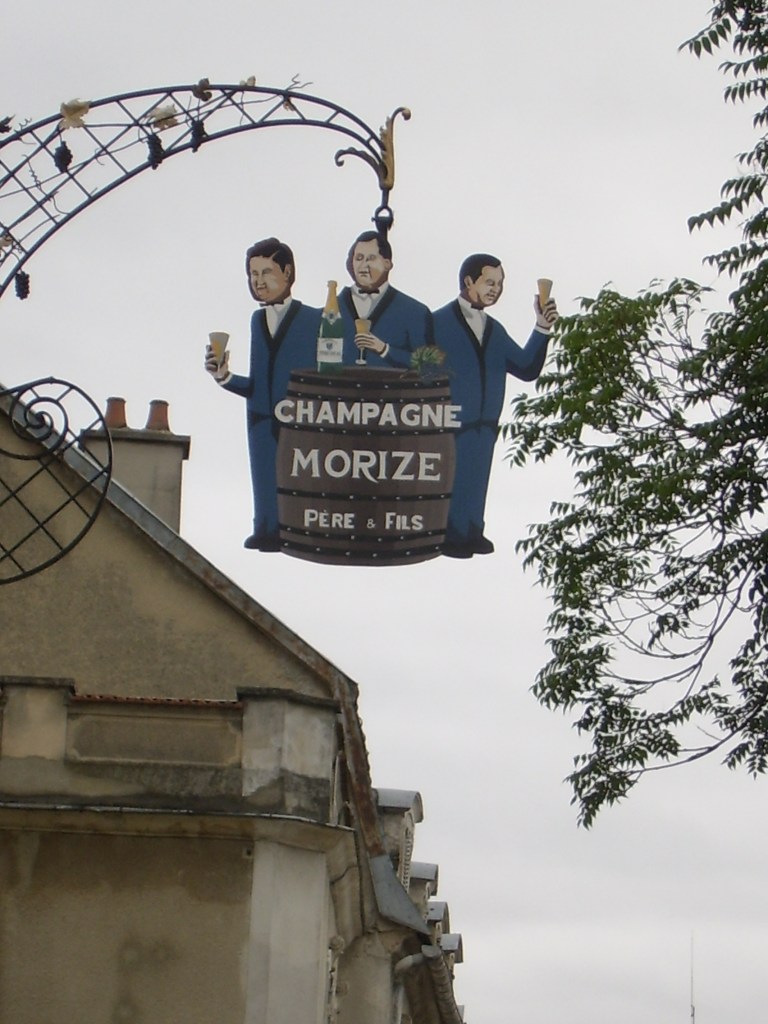
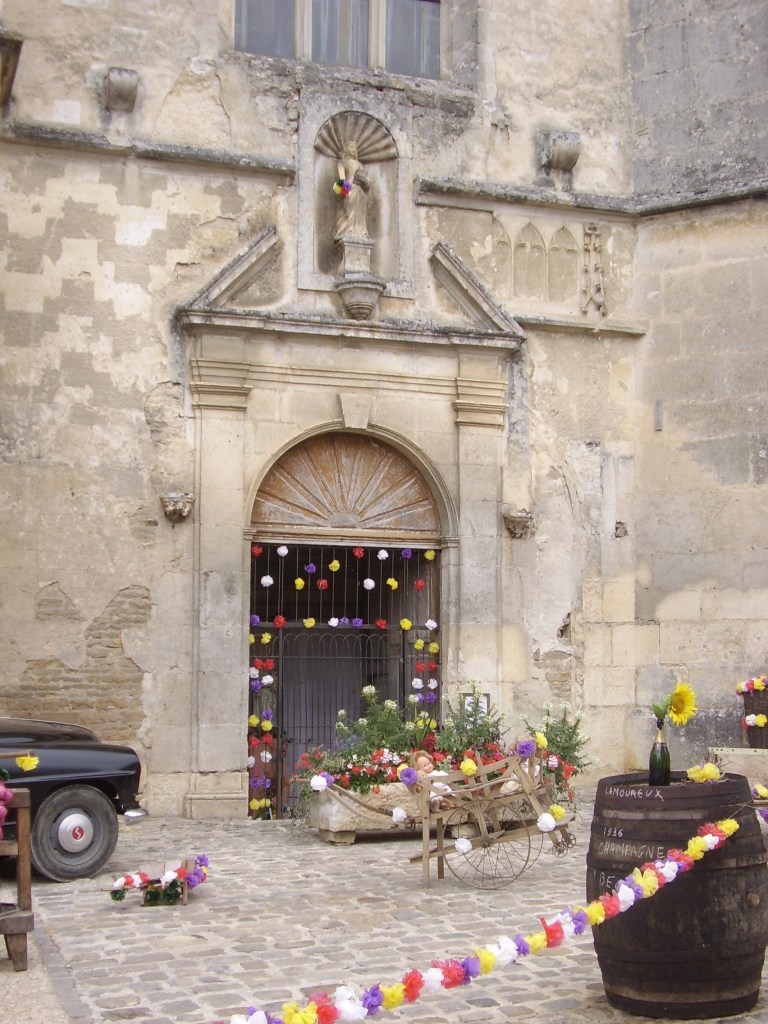
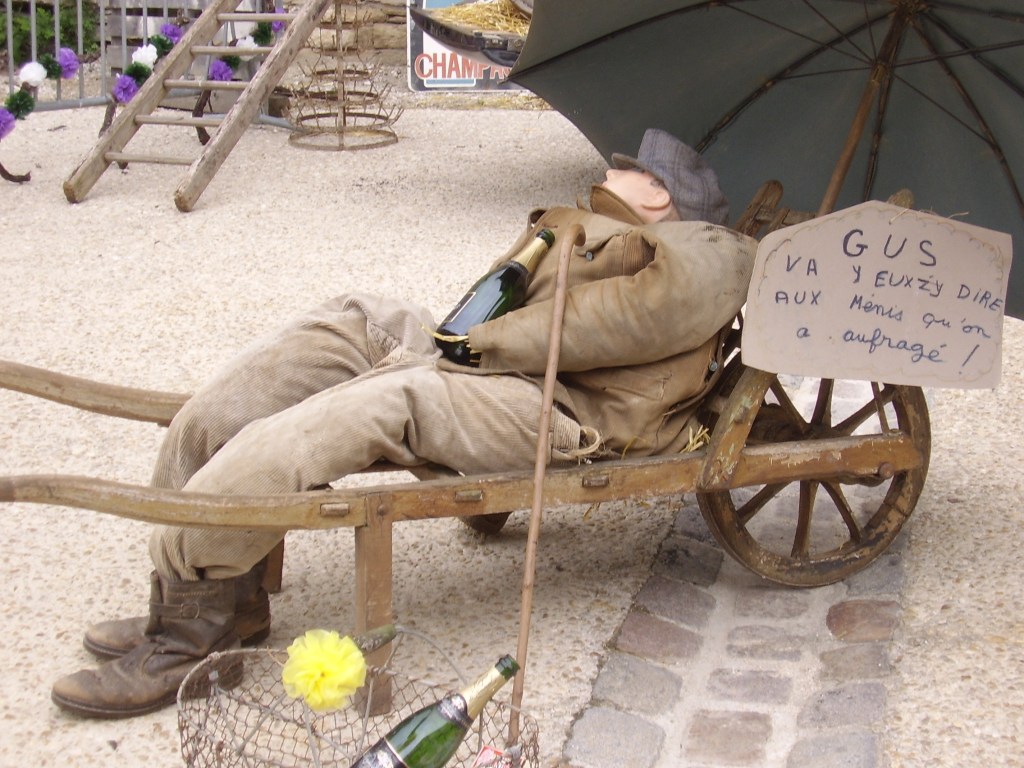
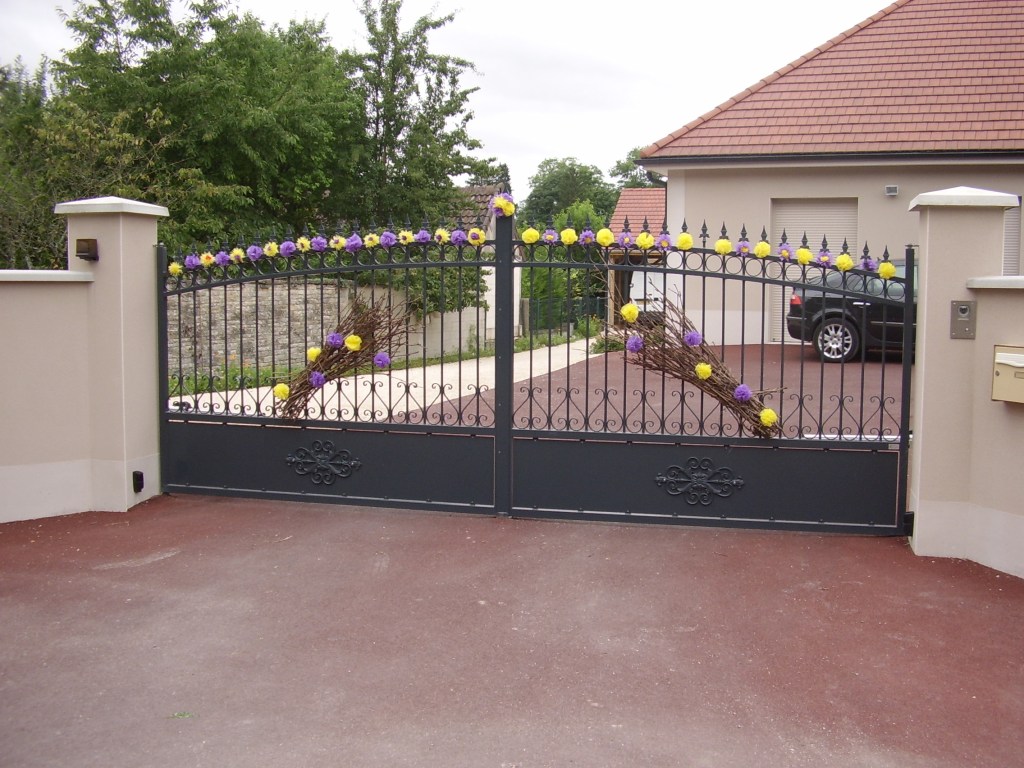
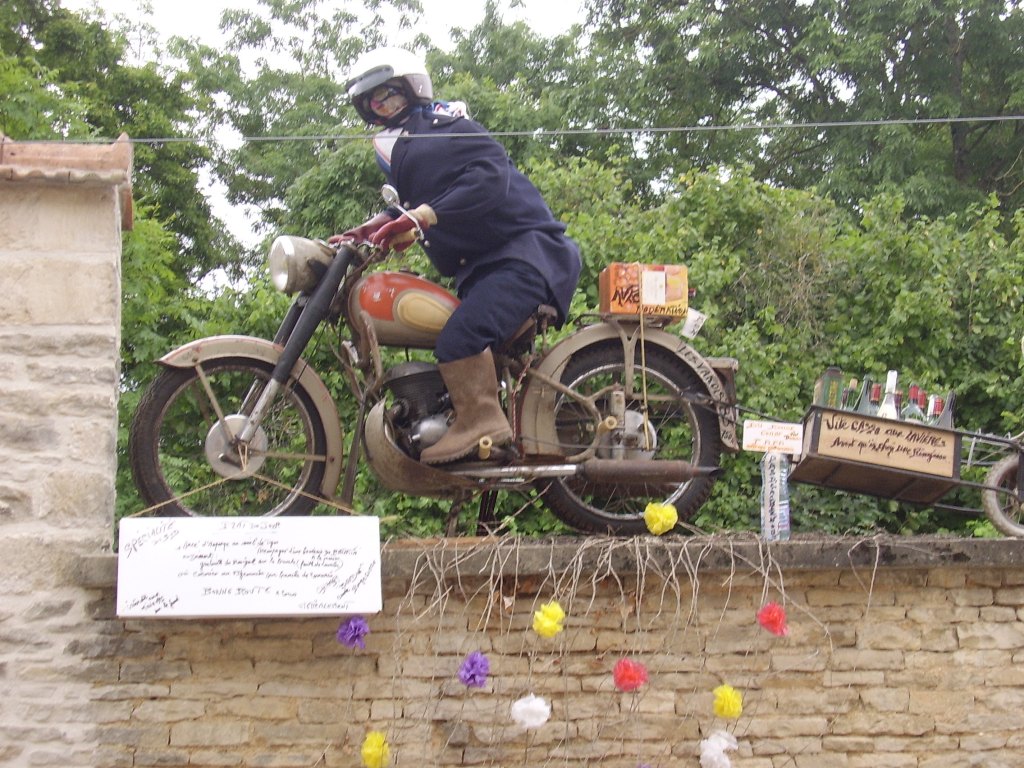
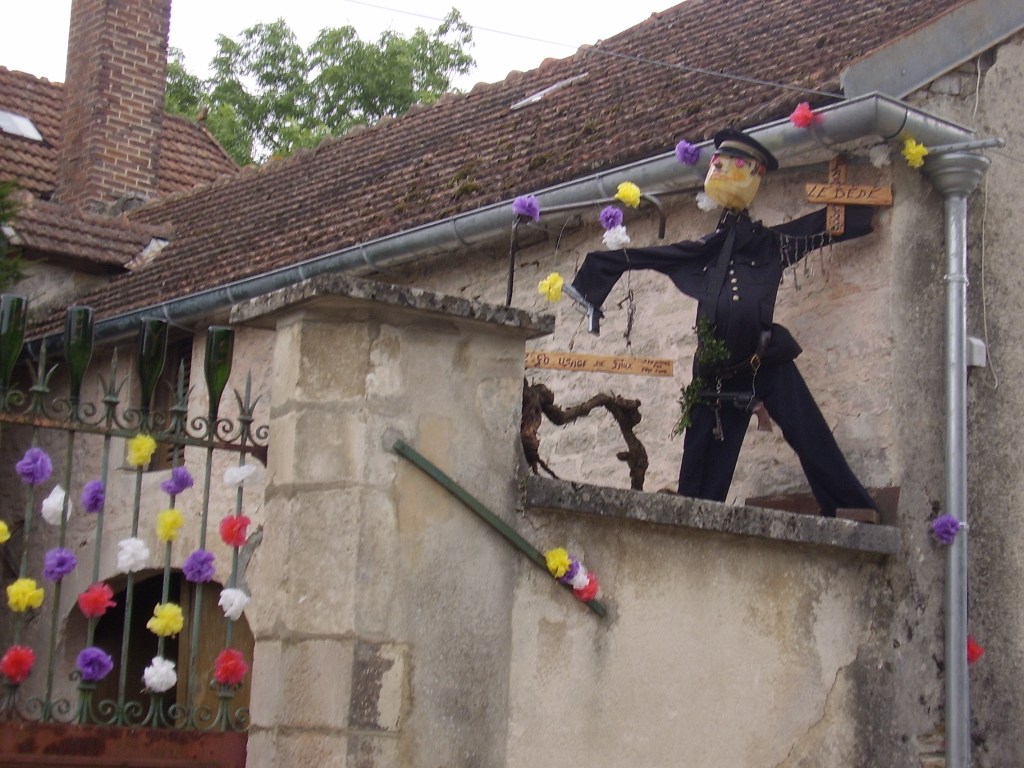
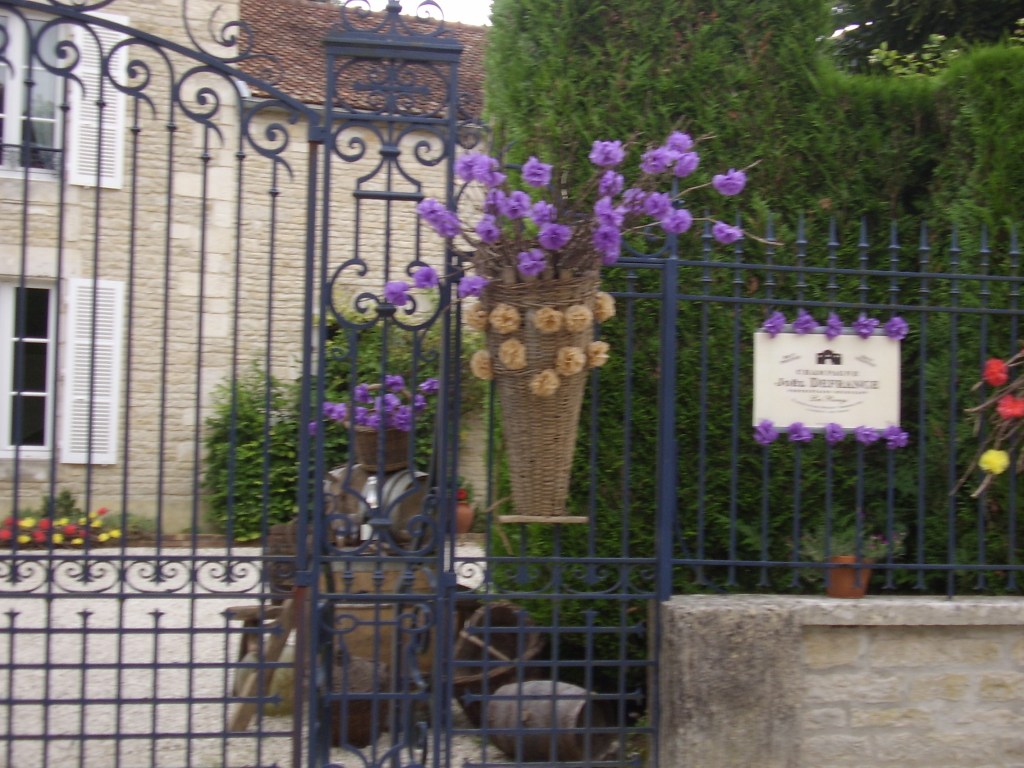
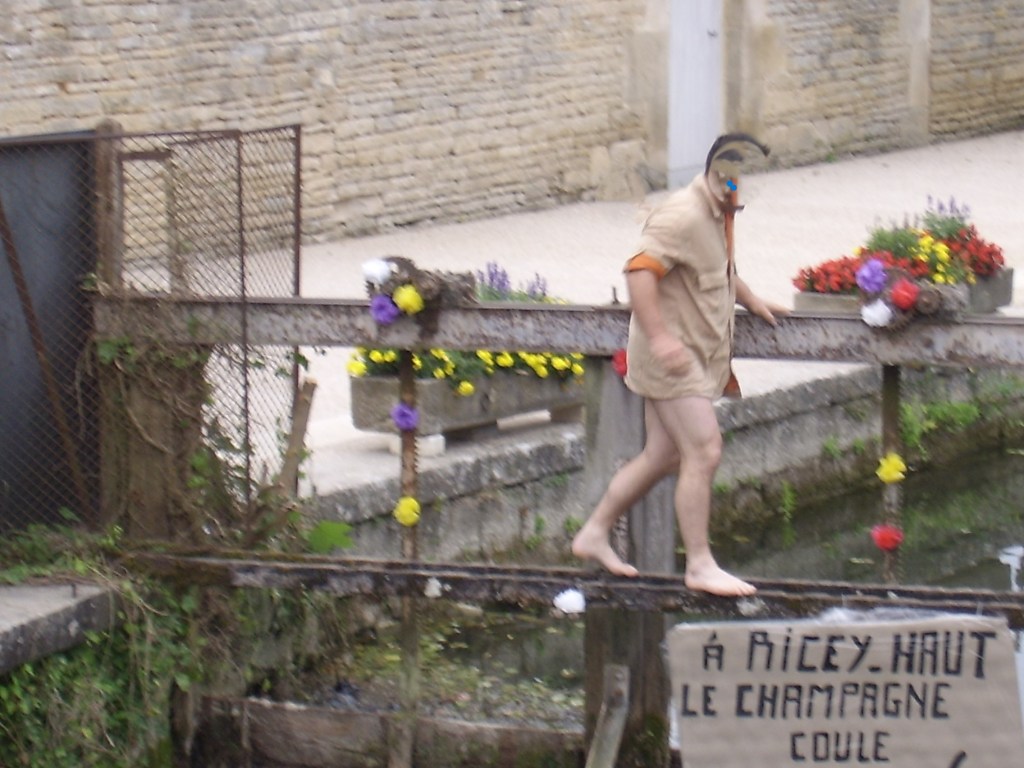
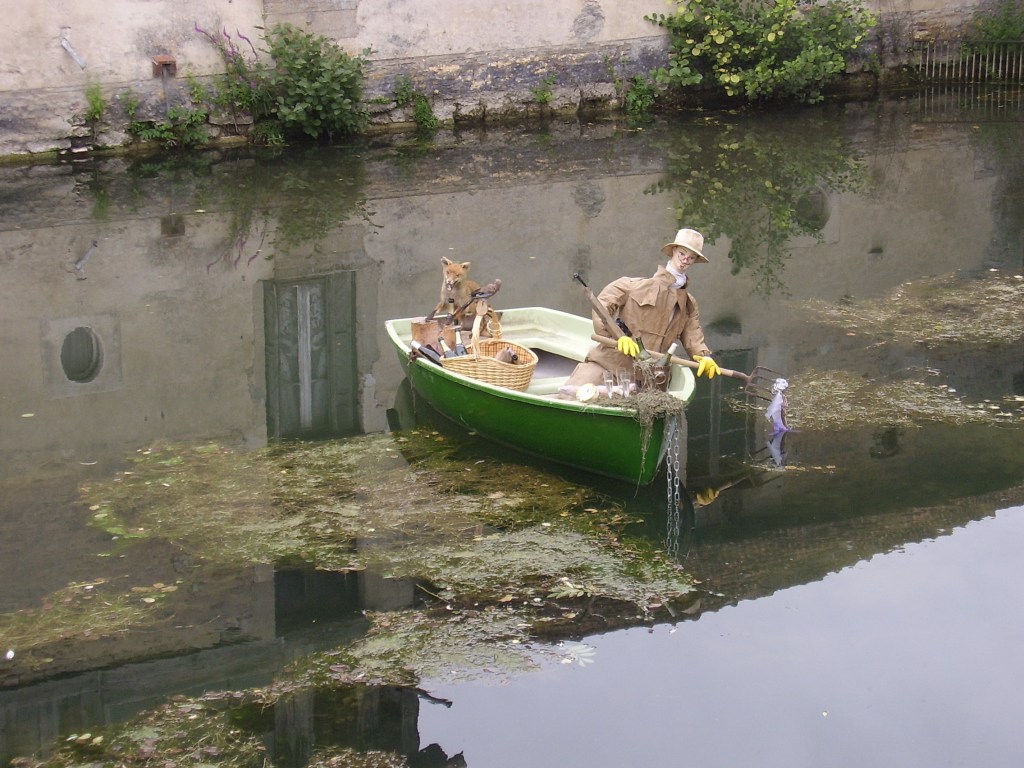
We drove the short journey to Les Riceys, parked the car and bought our tickets (apart from my daughter who was not well and so didn’t drink). The whole commune was decorated with flowers and little scenes created with model figures. We wandered around the village, calling into a number of producers, including Champagne Morize, where we found our friends helping out. They have family links with this Champagne house and I had visited it many times before to buy rather than to sample.
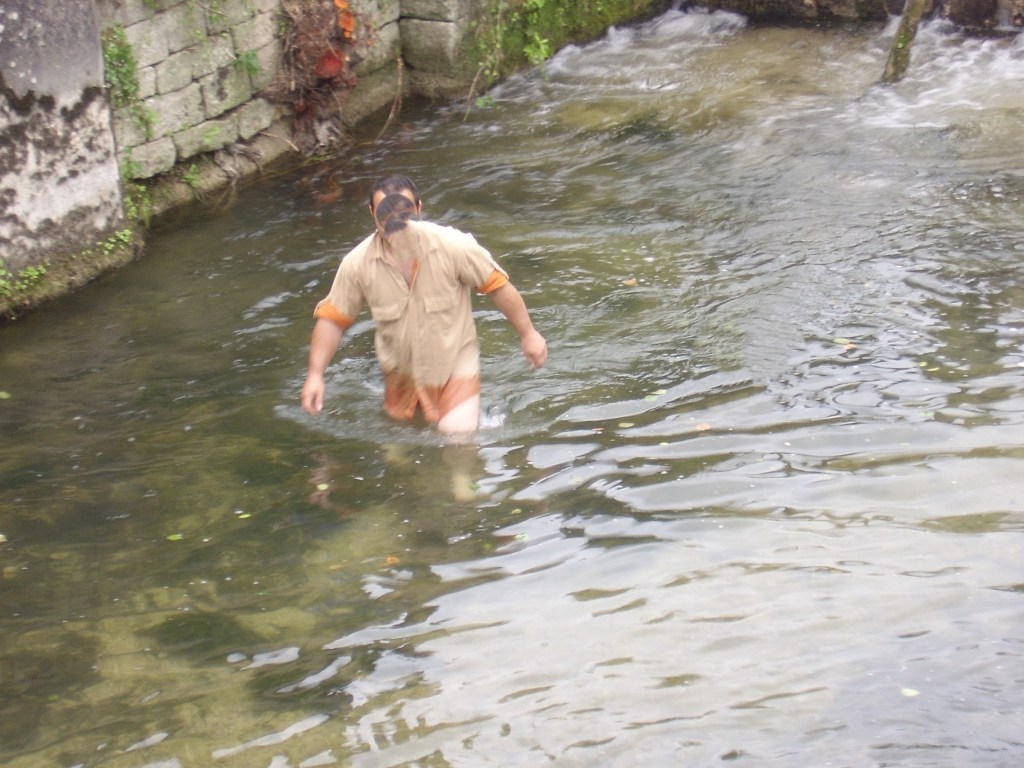
As we walked along, we noticed that a crowd was gathering around a bridge across a small river. There was a family of ducks swimming near a weir and one of the tiny ducklings had been washed over the weir and wasn’t able to get back up to its mother and siblings. A young lady was berating her companion and seemed to be suggesting that she was about to do something about this, which obviously worried him and, all of a sudden, he was removing his trousers, moving along a barrier by the weir and climbing down into the water. The water came up to his waist and must have had quite an undertow as it rushed under the bridge. He made his way towards the duckling; the crowd held its breath but the duckling managed to flap its way out of his grasp. He followed it back towards the barrier and it managed to avoid him again. In fact, he followed it around for several minutes with the crowd becoming increasingly worried about the fate of both man and duckling! Finally, he cornered it, close to the weir where its anxious mother was looking for it. He scooped it up and threw it back over the weir to where its family was waiting and the water was smooth. A huge cheer went up through the crowd and the hero of the afternoon was applauded as he climbed back up the barrier, took off his wet shirt and replaced his trousers. It was the highlight of our afternoon, even more so than the 7 glasses of champagne that we managed to taste. We could have gone back the next day, to use more of our vouchers but my companions were setting off for home and more members of my family were about to arrive. There were beds to be changed and dust to be swept up.
I thoroughly enjoyed this long stay, which included a trip to EuroDisney (never again), to Aube’s own theme park, Nigloland, visits to Burgundy and Chablis and a guided tour around Essoyes, where I learned a great deal about the Family Renoir (from painter/sculptor to filmmaker). Before I left for home, I was tootling around the countryside with my GPS language set to French and was regularly being asked if I had a loyalty card at the local Atac supermarket. Best of all, I was able to spend time sharing good times with old friends. My family and I were lavishly entertained by my friends and their family (all of whom I have known for years) and it was good to be able to entertain them occasionally, even when it was simply for an aperitif (very French!).
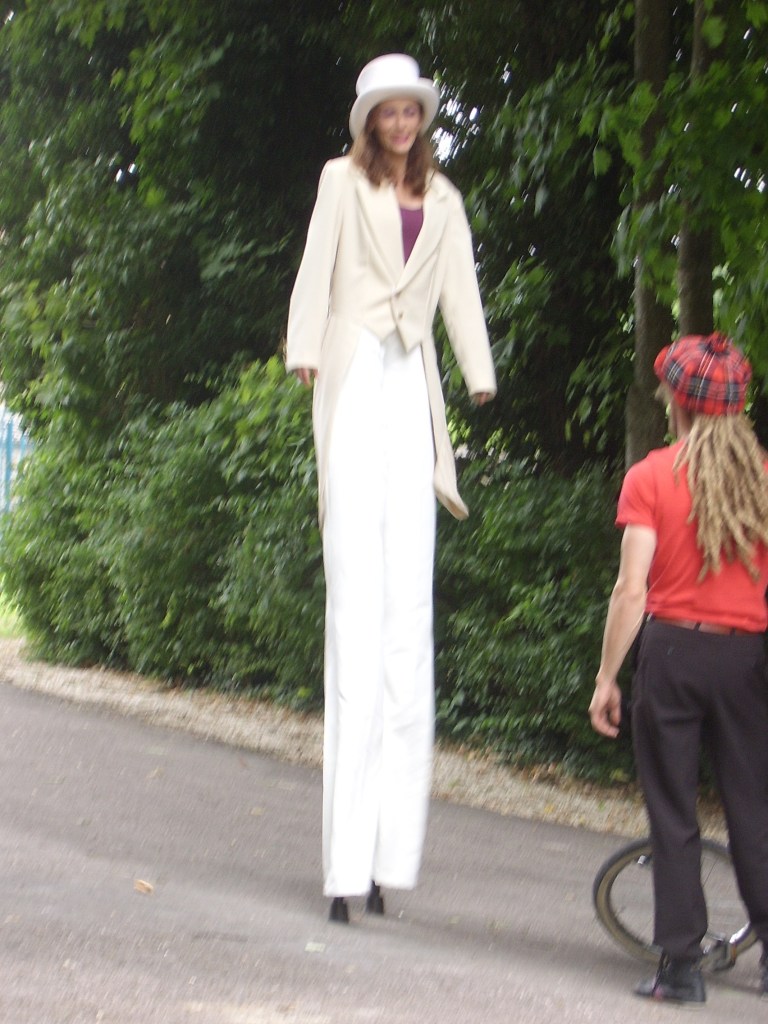
I hope you enjoy the photos of the “Route du Champagne”. It was a very small part of a great 5 weeks…. with mostly good weather!

































 One Anne and Her Dog